
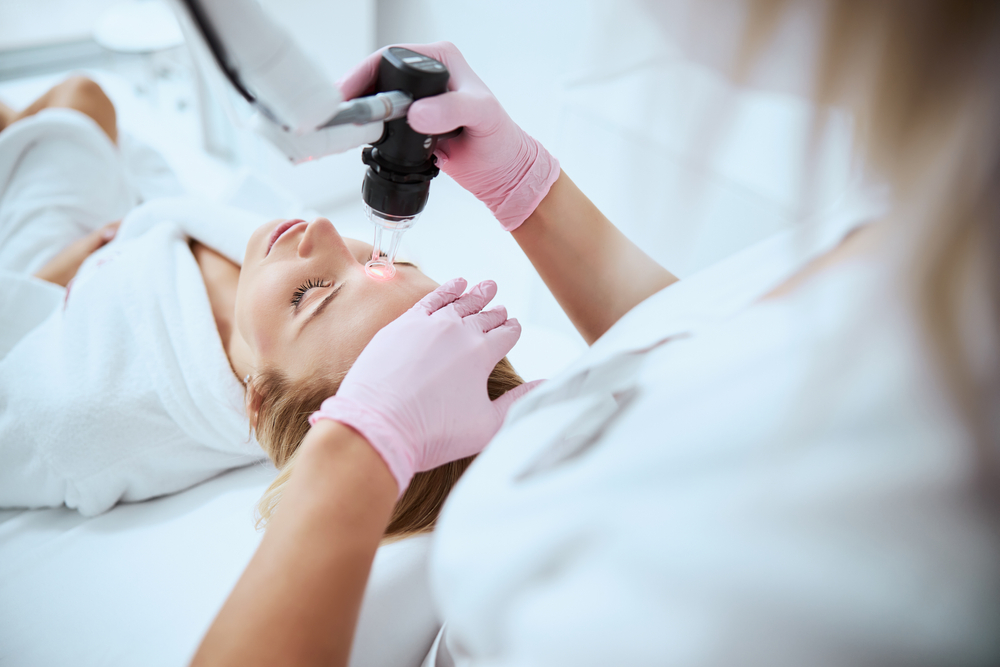
Fractional CO₂ Laser
Fractional CO₂ laser is one of the most powerful laser procedures used for acne scars, surgical scars, fine lines, and skin texture irregularities. The procedure creates controlled micro-thermal zones in the skin, activating the repair process and stimulating collagen remodeling.
However, fractional CO₂ laser is not a simple cosmetic treatment. The outcome depends significantly on skin type, scar depth, laser parameters used, physician experience, and post-procedure care. For this reason, this treatment should only be planned after a dermatological examination and individualized assessment.
This article provides a medical explanation of the indications for fractional CO₂ laser, who is not a suitable candidate, what to consider before and after the procedure, possible risks, and realistic outcome expectations.
How Does Fractional CO₂ Laser Work?
Fractional CO₂ laser creates microscopic columns of thermal injury in the skin. Because healthy tissue remains surrounding these micro-zones, the healing process is more controlled.
The primary goal of the procedure is not to “burn” the skin — it is to create a controlled repair response. As a result of this response:
| Effect | Expected Outcome |
|---|---|
| Stimulation of collagen synthesis | Skin texture may appear smoother |
| Renewal of aged cells | Skin tone may appear more vibrant |
| Effect on scar tissue | Appearance of acne scars may be reduced |
| Resurfacing of skin surface | Appearance of enlarged pores may be reduced |
The most important point here is this: fractional CO₂ laser can produce results, but the outcome is not the same for every patient.
No responsible dermatologist should make promises such as “100% results,” “completely scar-free skin,” or “no risks whatsoever” for this procedure.
What Conditions Is Fractional CO₂ Laser Used For?
Fractional CO₂ laser is most commonly used for skin texture concerns. It may be planned — following a dermatologist’s evaluation — particularly in patients with acne scars, surgical scars, fine lines, and sun damage.
Acne Scars
Acne scarring is one of the most frequent reasons patients seek this procedure. Fractional CO₂ laser can help the skin appear smoother, particularly in cases of depressed, uneven, or long-standing acne scars.
The laser stimulates a renewal process within scar tissue, which may reduce the appearance of scars. However, stating that it “completely eliminates acne scars” is not accurate. The American Academy of Dermatology emphasizes that laser treatment can reduce the appearance of scars, but that outcomes are individual.
For deep ice-pick type scars, laser alone may not be sufficient. In such cases, a dermatologist may recommend subcision, TCA CROSS, microneedling, PRP, or other combination treatments.
Scars
Fractional CO₂ laser may be used to smooth the appearance of surgical, traumatic, or post-acne scars. The goal is not to erase the scar entirely, but to reduce its surface irregularity, firmness, and color difference.
Patient expectations in scar treatment must be realistic.
Fine Lines
Fractional CO₂ laser may be beneficial for fine lines. It can help the skin appear smoother, particularly for superficial signs of aging around the eyes, mouth, and cheeks.
However, this procedure does not replace a surgical facelift. If significant sagging is present, expecting a dramatic lifting effect from laser alone is not appropriate.
Enlarged Pore Appearance
Pores do not close completely — this is a medically inaccurate statement. Fractional CO₂ laser can improve skin texture, helping pores appear less noticeable.
Sun Damage and Skin Tone
Sun damage can cause surface spots, roughness, fine lines, and uneven skin tone. Laser resurfacing may be used for these concerns. However, sun protection is the most critical component of the procedure.
The American Academy of Dermatology states that sun protection before and after laser treatment is essential; applying laser to tanned or sunburned skin can cause severe burns and pigmentation changes.
Who Is a Suitable Candidate for Fractional CO₂ Laser?
This procedure is not planned identically for every patient. Suitability is determined only after a dermatologist’s examination. During the consultation, skin type, depth of scarring, acne activity, risk of pigmentation changes, history of herpes, current medications, and the patient’s outcome expectations are each assessed individually.
Fractional CO₂ laser may be suitable in the following conditions:
| Concern | Suitability |
|---|---|
| Post-acne depressed scars | May be suitable |
| Old scars | After dermatologist evaluation |
| Fine lines | May be suitable |
| Skin texture irregularities | May be suitable |
| Enlarged pore appearance | May be suitable |
| Sun damage | With caution, with SPF regimen |
The fundamental principle here is straightforward: the procedure should be matched to the patient, not simply to the skin condition.
Who Should Not Undergo Fractional CO₂ Laser?
Fractional CO₂ laser is not appropriate for everyone.
The procedure is generally not recommended in the following situations. If any of these conditions are present, the decision should only be made after a dermatologist’s examination and individual risk assessment:
- Active herpes infection
- Active bacterial, viral, or fungal infection
- Active pustular and inflammatory acne
- Open wounds, eczema flare-up, or dermatitis
- Isotretinoin use within the past 6 months
- Tendency toward keloid or hypertrophic scarring
- Uncontrolled diabetes
- Poor wound healing
- Immunosuppressive conditions
- Pregnancy and lactation
- Recent sunburn or active tanning
- High risk of pigmentation changes in very dark skin types
- Prior radiation therapy to the treatment area
- Collagen vascular diseases
- Unrealistic outcome expectations
Fractional CO₂ Laser in Darker Skin Types
Stating that fractional CO₂ laser is completely contraindicated in darker skin types is not accurate. However, in Fitzpatrick skin types IV–VI, the risk of post-procedural pigmentation — specifically post-inflammatory hyperpigmentation — may be considerably higher.
Patients in this group should exercise greater caution:
- Laser parameters must be selected with greater care
- The skin may be preconditioned beforehand
- An SPF regimen must be strictly followed
- If melasma or active pigmentation is present, the procedure may be postponed
- Alternative procedures may be discussed
Pre-Procedure Preparation
The outcome of fractional CO₂ laser does not depend solely on decisions made on the day of the procedure. The preparation phase is equally important.
During the consultation, the physician should assess:
- Skin type
- Acne activity
- Type and depth of scars
- Risk of pigmentation changes
- History of herpes
- Isotretinoin and other medication use
- Recent sun exposure
- Previous cosmetic procedures
- Patient’s plan for returning to work and social life
- Realistic outcome expectations
What Should Be Considered Before the Procedure?
General guidelines are as follows:
- Avoid sun tanning and tanning beds
- Postpone the procedure if tanning or sunburn is present
- Discontinue irritating products such as retinol, acids, and scrubs as directed by the physician
- If there is a history of herpes, inform the dermatologist in advance
- If active acne is present, bring acne under control first
- Reduce or discontinue smoking
- Avoid any irritating interventions to the skin before the procedure
How Is the Fractional CO₂ Laser Procedure Performed?
The procedure must be performed in a clinical setting. Performing it in a non-sterile environment, at home, or by unqualified individuals is dangerous.
The process typically proceeds as follows:
- The skin is cleansed.
- The dermatologist reassesses the skin condition.
- Topical anesthetic cream is applied if necessary.
- Eye protectors are used.
- Laser parameters are selected according to skin type and concern.
- The treatment area is addressed in a systematic manner.
- Soothing and restorative care is applied after the procedure.
- Home care instructions are explained to the patient.
During the procedure, sensations of heat, stinging, and burning may occur. The intensity of these sensations depends on the patient’s sensitivity, the depth of laser penetration, and the area being treated.
Recovery Period After Fractional CO₂ Laser
After the procedure, the skin may appear red, feel warm, tight, and sensitive. In the following days, dryness, darkening, crusting, and peeling may be observed.
This phase may appear uncomfortable to the patient, but it is frequently a part of the healing process. The key point is to avoid forcibly peeling the skin, scratching, or independently using active products.
Key Points for the First 24 Hours
During the first day, the skin barrier becomes highly vulnerable. During this period:
- Avoid touching the skin excessively
- Use only the products provided by the dermatologist
- Do not apply makeup
- Avoid saunas, steam, and hot water
- Avoid sun exposure
- Avoid direct contact with ice
Care Guidelines for the First 72 Hours
The first 72 hours is the most critical period in terms of infection and irritation risk.
During this period:
- Do not pick or remove crusts
- Do not use scrubs or acids
- Avoid intense exercise, swimming pools, hammams, and saunas
- Apply the restorative cream prescribed by the dermatologist
- If severe pain, discharge, foul odor, or increasing redness occurs, seek medical attention immediately
7–14 Day Recovery Phase
During this period, crusting decreases and new skin surface begins to appear. However, the skin remains sensitive. Sunscreen, a gentle moisturizer, and the dermatologist’s instructions should continue to be followed.
Why Is Sun Protection So Important?
After fractional CO₂ laser, sun protection directly determines both outcomes and safety. UV rays can increase the risk of post-procedural pigmentation, burns, prolonged redness, and scarring.
Key guidelines:
- Use a broad-spectrum sunscreen with SPF 30 or higher
- Reapply sunscreen throughout the day
- Wear a hat and sunglasses
- Avoid direct sun exposure during midday hours
- Postpone tanning beds, beach activities, and intentional tanning
The American Academy of Dermatology warns that a patient who comes to laser treatment with a tan or sunburn cannot be treated; in this condition, the laser can cause severe burns and pigmentation changes.
Can Fractional CO₂ Laser Be Performed in Summer?
It can be performed in summer, but it is not appropriate for every patient. In Azerbaijan’s climate — particularly in Baku and the Absheron Peninsula — sun exposure is high, making a more cautious approach necessary during the summer months.
In summer, the procedure may only be considered if:
- The patient can strictly protect themselves from sun exposure
- No tanning or sunburn is present
- No beach or active sun exposure is planned in the next 4–6 weeks
- An SPF regimen will be strictly followed
- The dermatologist considers the procedure appropriate
If the patient will be vacationing soon, spending extended time in the sun, or is unlikely to follow an SPF regimen, postponing the procedure to the autumn or winter season is safer.
How Many Sessions Does Fractional CO₂ Laser Require?
The number of sessions varies depending on the skin concern. For mild texture irregularities, 1–2 sessions may be sufficient. For deep acne scars and old scars, 3–5 or more sessions may be required.
| Concern | Estimated Number of Sessions |
|---|---|
| Mild texture irregularities | 1–2 sessions |
| Fine lines | 1–3 sessions |
| Enlarged pore appearance | 1–3 sessions |
| Mild acne scars | 2–3 sessions |
| Deep acne scars | 3–5+ sessions |
| Surgical and traumatic scars | Individual plan required |
The skin must fully recover between sessions. Performing procedures too frequently can increase the risk of pigmentation changes, irritation, and barrier damage.
When Are Results Visible?
Initial changes may become apparent after crusting subsides. However, because the primary outcome is related to collagen remodeling, time is required.
| Period | Expected Changes |
|---|---|
| 3–7 days | Redness, crusting, sensitivity |
| 1–3 weeks | Skin may appear smoother |
| 1–3 months | Texture improvement with collagen remodeling |
| 3–6 months | More stable results |
Results vary individually. Skin type, age, scar depth, physician experience, and post-procedure care all influence the outcome.
Possible Risks and Side Effects of Fractional CO₂ Laser
Fractional CO₂ laser is a powerful procedure and side effects are possible. These should be explained to the patient in advance.
Possible side effects:
- Redness
- Swelling
- Burning sensation
- Crusting
- Dryness
- Itching
- Temporary darkening
- Post-inflammatory hyperpigmentation
- Hypopigmentation
- Herpes reactivation
- Bacterial infection
- Prolonged redness
- Scarring in rare cases
Published sources note that laser procedures carry potential complications including burns, pigmentation changes, eye injury, and post-procedural infection.
How Can Risks Be Minimized?
There are three key phases for minimizing risks: selecting an experienced dermatologist, appropriate patient selection, correct procedure execution, and proper home care.
Key guidelines:
- The procedure must be performed by or under the supervision of an experienced dermatologist
- Skin type and risk of pigmentation changes must be assessed in advance
- If active acne or infection is present, treatment must be completed first
- A history of herpes must be disclosed to the physician
- Sun protection must be rigorously applied
- Crusts must not be picked off
- Retinol, acids, and scrubs must not be started without physician authorization
- The dermatologist should be contacted promptly if any concerning signs appear
When Should You See a Doctor After the Procedure?
Contact the treating physician without delay if any of the following occur:
- Pain increases rather than decreasing
- Redness spreads rapidly
- Purulent discharge, foul odor, or severe swelling develops
- Fever or chills occur
- Herpes-like blisters appear
- Eye pain or visual disturbance develops after periorbital treatment
- The healing process takes longer than expected
- Pigmentation spots rapidly darken or increase
Fractional CO₂ Laser Cost in Baku 2026
The cost of fractional CO₂ laser in Baku is not fixed.
Pricing varies depending on the skin condition, the area to be treated, the quality of the device, physician experience, and the number of sessions required.
| Factor Affecting Price | Explanation |
|---|---|
| Area to be treated | Full face, localized scar, neck, and décolletage may be priced differently |
| Depth of concern | Deep scars may require more sessions |
| Device and technology | More advanced devices may affect pricing |
| Physician experience | Selecting an experienced dermatologist may affect cost |
| Combination procedures | PRP, subcision, or other treatments may be added |
| Post-care package | Restorative products may be included or billed separately |
The cost of fractional CO₂ laser is determined during the dermatology consultation based on skin condition, the area to be treated, and the number of sessions required.
How Does Fractional CO₂ Laser Differ From Other Procedures?
Fractional CO₂ Laser vs. Microneedling
Microneedling is also a collagen-stimulating procedure. It may involve a milder recovery period. Fractional CO₂ laser, however, may provide a more powerful resurfacing effect, though with a longer recovery time and higher associated risks.
Fractional CO₂ Laser vs. Chemical Peel
Chemical peels are more commonly used for superficial pigmentation, oiliness, and mild texture concerns. Fractional CO₂ laser may be considered for deeper texture issues. The choice should be based on the individual skin condition.
Fractional CO₂ Laser vs. PRP
PRP may be used to support the skin’s repair process. In some cases, PRP may be planned following laser treatment. This decision should be made solely by the physician.
Frequently Asked Questions
Is fractional CO₂ laser safe?
When performed by an experienced dermatologist with appropriate patient selection, a sterile clinical setting, suitable device parameters, and rigorous post-procedure care, fractional CO₂ laser is considered an effective and relatively safe procedure. That said, it is an ablative laser procedure and carries risks including redness, crusting, edema, hyperpigmentation, infection, herpes reactivation, and, in rare cases, scarring.
Is fractional CO₂ laser painful?
Sensations of heat, stinging, and burning may occur during the procedure. Topical anesthetic cream can reduce discomfort. The level of pain depends on individual sensitivity, laser depth, and the area being treated.
Does fractional CO₂ laser completely eliminate acne scars?
No. The procedure can reduce the appearance of acne scars and improve skin texture. For deep scars, multiple sessions and combination treatments may be required.
How long is the recovery after fractional CO₂ laser?
Initial recovery typically takes 5–7 days. With deeper procedures, redness and sensitivity may persist for 10–14 days or longer.
Can fractional CO₂ laser be performed in summer?
It may be performed only in patients who can strictly protect themselves from sun exposure and at the dermatologist’s discretion. If tanning, sunburn, or upcoming beach plans are present, the procedure should be postponed.
Who should not undergo fractional CO₂ laser?
The procedure may not be appropriate in cases of active herpes, active skin infection, inflammatory acne, keloid tendency, recent isotretinoin use, sunburn, pregnancy, and certain systemic conditions.
When are results visible?
Initial changes may become apparent within 1–3 weeks. The primary outcome related to collagen remodeling develops over 1–3 months, with more stable results forming over 3–6 months.
Can makeup be applied after the procedure?
Makeup is not recommended during the first few days. As the skin barrier is open and sensitive, makeup may increase the risk of irritation and infection.
Are the results permanent?
Results may be long-lasting, but the aging process continues. Sun protection, proper skincare, and a healthy lifestyle help maintain results over time.
Conclusion
Fractional CO₂ laser is a powerful ablative laser procedure that can be beneficial for acne scars, surgical scars, fine lines, and skin texture irregularities. When applied correctly, it can help the skin appear smoother, more even, and more renewed.
However, this is not a simple cosmetic treatment. The patient’s skin type, health status, current medications, history of herpes, sun exposure habits, risk of scarring, and realistic expectations must all be thoroughly evaluated by a dermatologist.