
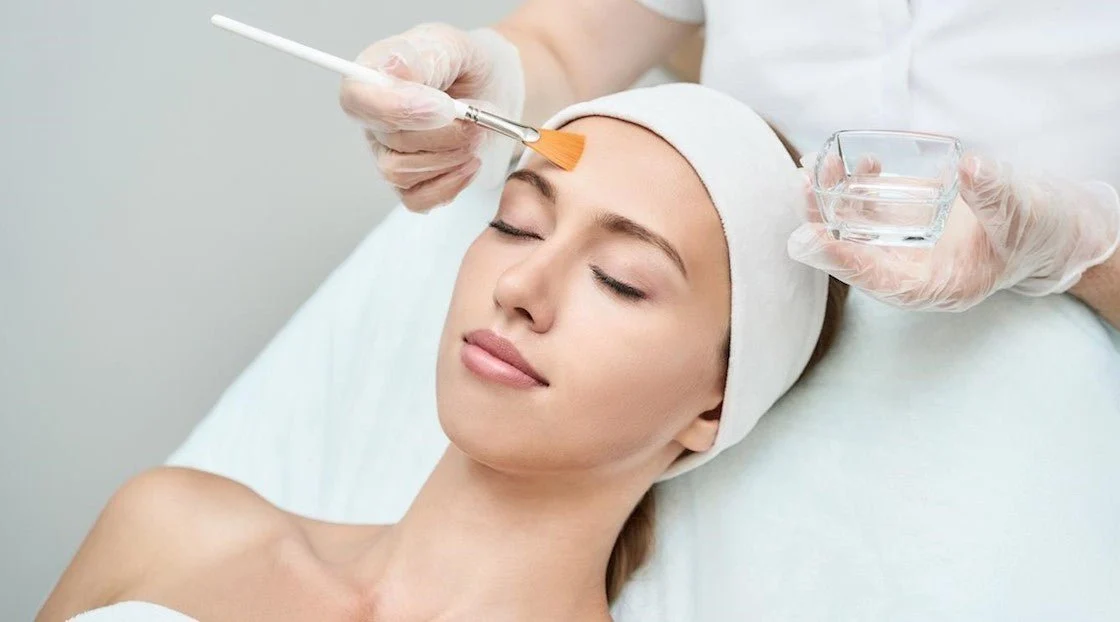
Glycolic acid peel
A glycolic acid peel is a chemical peeling method used to create controlled exfoliation on the upper layer of the skin. It can be used primarily for surface blemishes, post-acne discoloration, a dull appearance, and an uneven skin texture.
The suitability of a glycolic acid peel is not determined solely by whether the skin is oily or dry. The condition of the skin barrier, active redness and inflammation, cosmetics and medical products being used, skin phototype, and the cause of the blemish must be evaluated together.
A brown spot left after acne and an acne scar that creates a depression in the skin are not the same problem. A glycolic acid peel can be useful for surface color changes, but it does not eliminate deep, depressed acne scars on its own.
What is a glycolic acid peel?
Glycolic acid belongs to the alpha-hydroxy acid (AHA) group. During a glycolic acid peel, the shedding of dead cells on the skin’s surface is accelerated, resulting in smoother, brighter, and more even-looking skin.
Glycolic acid is also used in toners, serums, and creams. However, a clinical peel is not the same as cosmetic products used at home. Before the procedure, the skin is evaluated, a suitable product and application protocol are selected, and skin reactions are monitored throughout the procedure.
How does glycolic acid work on the skin?
Glycolic acid helps weaken the bonds between cells in the upper layer of the skin and makes it easier for dead cells to shed. As the skin’s surface renews, texture and color irregularities may become less noticeable.
The effect produced by a peel on the skin depends not only on the concentration of the acid. Results and the risk of irritation are influenced by:
- Acid concentration;
- Product pH level;
- Duration of contact with the skin;
- Treated area;
- Skin phototype;
- Skin sensitivity;
- Condition of the skin barrier;
- Products used before and after the procedure.An intensive procedure not suited to the skin can increase the risk of redness, burning, blistering, and subsequent pigment changes.
How does a clinical glycolic acid peel differ from home-use glycolic acid?
Products containing glycolic acid used at home are formulated for daily or periodic skin care. A clinical peel is a more controlled procedure, and its application protocol is chosen based on the condition of the skin.
| Criterion | Home-use glycolic product | Clinical glycolic peel |
| Purpose | Ongoing skin care | Controlled professional exfoliation |
| Concentration & pH | Suitable for consumer use | Selected based on product and clinical protocol |
| Initial skin assessment | Often not performed | Performed before the procedure |
| Application | Applied by the user | Performed in a clinical setting |
| Reaction monitoring | Limited | Monitored throughout the procedure |
| Intervention if issues arise | Limited | Clinical evaluation is possible |
The unsupervised use of high-concentration chemical peel products at home can lead to severe complications such as chemical burns, blistering, infection, pigment changes, and scarring.
For which skin problems is a glycolic acid peel used?
A glycolic acid peel is mostly used for color and texture changes occurring in the superficial layers of the skin. It can be a suitable choice for superficial post-acne blemishes, a dull appearance, uneven skin texture, and certain pigment issues.
The procedure may be considered in the following cases:
- Superficial brown spots remaining after acne;
- Uneven skin texture;
- Dull appearance;
- Certain superficial pigment changes;
- Comedones and superficial congestion;
- Mild sun-induced discoloration;
- Fine surface lines.Every dark spot visible on the skin does not arise from the same cause. Post-acne hyperpigmentation, melasma, and sun spots may require different approaches.
Does a glycolic acid peel help with acne marks?
A glycolic acid peel can help reduce the appearance of superficial brown spots remaining after acne. However, it is not sufficient on its own for depressed and deep acne scars.
The term “acne scar” can refer to several different problems:
- Brown spot: Pigment change resulting from inflammation;
- Red mark: Color change associated with blood vessels and inflammation;
- Depressed scar: Tissue loss created in the skin structure.For deep scars, microneedling, subcision, lasers, or a combined approach may be discussed. The choice of method depends on the type and depth of the scar as well as skin characteristics.
Does a glycolic acid peel completely remove pigment spots?
No. A glycolic acid peel can help make certain superficial spots less noticeable, but it is not correct to guarantee the complete and permanent disappearance of all pigment spots.
In skin prone to melasma and post-inflammatory hyperpigmentation, strong irritation can conversely cause spots to darken. Therefore, sun protection and post-procedure care are essential parts of the result.
Does a glycolic acid peel shrink pores?
Glycolic acid can help reduce superficial congestion and make the skin surface look smoother. As a result, pores may appear visually less noticeable.
However, a peel does not physically “close” pores. Pores are also affected by genetics, skin oiliness, comedones, sun damage, and collagen loss.
Who might a glycolic acid peel be suitable for?
A glycolic acid peel may be a suitable choice for individuals whose skin barrier is stable, who lack active redness and inflammation, and whose main complaint is superficial blemishes or texture changes.
Consultations typically evaluate:
- Primary skin complaint;
- Active acne;
- Redness and burning;
- Skin phototype;
- Type of blemish;
- Condition of the skin barrier;
- Use of retinol, retinoids, AHA, and BHA;
- Previous peel and laser procedures;
- Sun exposure;
- Expected results.
Is a glycolic acid peel suitable for oily and acne-prone skin?
A glycolic acid peel can be used on oily and comedone-prone skin. It can be especially beneficial if post-acne blemishes and uneven texture are the main problems.
In the presence of active, painful, and widespread inflammatory acne, medical treatment of the pimples should come first. If oiliness and comedones are at the forefront, a dermatologist may choose a salicylic acid peel or another approach.
Can a glycolic acid peel be performed on dry skin?
Dry skin is not an automatic contraindication for a peel. The primary issue is the condition of the skin barrier.
If there is persistent burning, cracking, severe tightness, flaking, and increased sensitivity to ordinary care products, repairing the skin barrier may be necessary first.
Can a glycolic acid peel be performed on sensitive skin?
Sensitive skin may react more strongly to glycolic acid. If there is active rosacea, eczema, dermatitis, or a damaged skin barrier, the procedure may be postponed.
A gentler peel, a more cautious protocol, or an entirely different procedure may be suitable for some patients.
Is a glycolic acid peel performed on dark skin phototypes?
Chemical peels are possible on dark skin phototypes, but the risk of post-inflammatory hyperpigmentation and other pigment changes must be evaluated more carefully.
A more cautious approach includes:
- Prior assessment of the skin barrier;
- Starting the procedure with appropriate intensity;
- Regular sun protection;
- Avoiding the unsupervised use of additional irritating acids;
- Monitoring post-procedure skin reactions.
Who is a glycolic acid peel not suitable for?
If there is an active infection, open wound, sunburn, or severe skin irritation, chemical peels are usually postponed. In cases of active dermatitis, eczema, and rosacea flare-ups, skin conditions must first be stabilized.
Additional conditions requiring caution:
- Active herpes;
- Bacterial or fungal infection;
- Open wound;
- Sunburn;
- Active dermatitis;
- Severe redness and burning;
- Recent laser or cosmetological procedures;
- Tendency toward keloid scarring;
- Poor wound healing;
- Use of certain medications;
- Inability to protect skin from the sun post-procedure.Some of these conditions may be temporary. Once the problem resolves, the peel can be reassessed.
Can a person using retinol get a glycolic acid peel?
Retinol and prescription retinoids can alter skin sensitivity to irritation. Whether they should be discontinued before the procedure and the duration of the pause must be determined based on the product used, frequency, and skin reaction.
Inform your doctor during the consultation about:
- Retinol;
- Tretinoin and other prescription retinoids;
- AHA and BHA acids;
- Benzoyl peroxide;
- Scrubs;
- Active products used for pigmentation.Do not stop using prescribed preparations on your own without a doctor’s instruction.
Why is a history of herpes important?
A history of herpes on the face and lip area is important regarding the potential reactivation of the virus after certain cosmetological procedures.
If you have frequently experienced herpes on your lips or face in the past, inform your dermatologist during the consultation.
Can a glycolic acid peel be performed during pregnancy and breastfeeding?
Cosmetological procedures during pregnancy and breastfeeding must be evaluated on an individual basis. The product to be used, peel depth, application area, skin problem, and other medical factors are taken into account.
Doing a DIY peel with high-concentration acids at home for pregnancy-related spots is not a correct approach. Consulting a dermatologist and your obstetrician is safer.
What should be considered before a glycolic acid peel?
Inform your dermatologist about the medications you use and active products applied to your skin prior to the procedure.
It is helpful to prepare the following information before your consultation:
- Retinol, retinoid, and acid usage;
- History of herpes;
- Wounds, redness, or active irritation on the skin;
- Recent laser, hair removal, or other peel procedures;
- Medications you are taking;
- Allergy history;
- Recent intense sun exposure;
- Your ability to protect your skin from the sun in the days following the procedure.Some patients may require simplified skin skincare and stabilization of the barrier prior to the procedure.
Can I wear makeup on the day of the procedure?
It is more convenient to arrive at the clinic without makeup. The skin will be cleansed before the procedure anyway.
Heavy foundation, oily products, and multiple layers of active serums can make it difficult to assess the skin’s current condition.
How is a glycolic acid peel performed?
A glycolic acid peel is performed step-by-step after evaluating the skin’s condition. The skin is cleansed, a suitable peeling product is applied, and skin reactions are monitored.
General stages:
- The skin’s condition is assessed one final time.
- Residues of makeup, oil, and care products are removed.
- Sensitive areas are protected.
- The peeling solution is applied to the skin.
- Tingling, redness, and other reactions are monitored.
- At the established time, the product is removed or neutralized according to protocol.
- Soothing care is applied if necessary.
- Home care recommendations are provided.Application rules for peeling systems may vary. Therefore, manufacturer protocols and clinical assessments guide specific products.
What does it feel like during the procedure?
A mild sensation of warmth, tingling, and stinging may occur.
Severe pain and rapidly increasing burning are not considered normal reactions. If such a condition occurs, it must be reported immediately to the specialist performing the procedure.
How many minutes does a glycolic acid peel take?
The total appointment duration depends on the consultation, skin preparation, peel, and subsequent care stages.
The duration of acid contact with the skin is chosen based on product characteristics and skin reaction.
How to care for the skin after a glycolic acid peel?
After the peel, the skin may appear more sensitive, dry, and red for a few days. The main goal during this period is to protect the skin barrier and prevent additional irritation.
Keep care simple:
- Gentle cleanser;
- Skin-appropriate moisturizer;
- Broad-spectrum sunscreen;
- Direct and long-term sun protection.Retinol, additional acids, scrubs, and other irritating actives may need to be paused for a duration matching your skin’s condition.
What to do in the first 24 hours?
Do not wash your skin with very hot water on the first day. Do not use harsh cleansers, scrubs, or alcohol-based toners.
Do not scratch the skin or peel off resulting flakes.
Why is SPF important after a peel?
Sun protection is especially important after chemical peels. The American Academy of Dermatology recommends sunscreen use in post-peel home care.
Sunscreen should be applied in the morning and reapplied according to outdoor exposure time. Hats, shade, and avoiding direct sun provide extra protection.
Which products may need to be paused?
Until the skin calms down, pauses may be needed for:
- Retinol and retinoids;
- AHA and BHA acids;
- Scrubs;
- Benzoyl peroxide;
- Alcohol-based toners;
- Strong exfoliating serums.Determine when to restart products based on skin reaction and doctor recommendations.
What to do if the skin peels?
Do not pull off flakes and peeling skin sections.
Forcibly peeling the skin can damage the skin barrier, increasing the risk of open wounds, infections, and subsequent pigmentation. Cleanse the face gently, moisturize, and allow the skin to recover.
What is the recovery time?
Recovery time varies depending on the intensity of the peel and skin sensitivity. Many people can continue daily activities after a surface peel.
However, for a few days, you may observe:
- Redness;
- Dryness;
- Tightness;
- Sensitivity;
- Fine flaking.
Can I return to work after the procedure?
Many patients continue daily activities after a superficial peel.
If you have an important meeting, event, or photoshoot planned, performing the procedure immediately before that date may not be advisable. Since skin reactions are individual, recovery time must be accounted for in advance.
When can makeup be applied?
The time to return to makeup depends on the peel’s intensity and skin reaction.
If there is severe redness, burning, and flaking on the skin, delaying makeup is preferable. When resuming makeup, use clean brushes and sponges.
When do results appear and how many sessions are needed?
After the first surface peel, skin may feel smoother to the touch and appear brighter. Pigmentation and texture changes occur more gradually.
Results are influenced by:
- Problem type;
- Depth of blemish or scar;
- Skin phototype;
- Peel protocol;
- Skin reaction;
- Number of sessions;
- Sun protection;
- Home care;
- Emergence of new acne and inflammation.The results of a glycolic acid peel cannot be considered permanent for life. Sun exposure, aging, hormonal changes, and new acne episodes continue to affect the skin’s appearance.
Is one session enough?
A single session can yield a smoother, brighter look.
For blemish and texture problems, a multi-session plan may be necessary. The number of sessions is not predetermined as identical for everyone.
How much time is left between sessions?
Breaks are chosen based on the type of peel, intensity, and skin recovery.
If the skin is still burning, noticeably red, or flaking, recovery must be awaited prior to the next procedure.
How does a glycolic acid peel differ from other acid peels?
Glycolic, salicylic, and mandelic acids do not share identical properties. Choosing among them should be based on “which is suitable for which skin problem?” rather than “which is stronger?”
What is the difference between glycolic and salicylic peels?
Glycolic acid belongs to the AHA group and is used to improve surface texture and color irregularities.
Salicylic acid belongs to the BHA group, and its lipid-solubility gives it an advantage in skin problems where oiliness, comedones, and pore congestion are prominent.
| Criterion | Glycolic peel | Salicylic peel |
| Acid group | AHA | BHA |
| Solubility | Water | Oil |
| Common use cases | Surface texture and color changes | Oiliness, comedones, and congestion |
| Possible reactions | Stinging, dryness, redness | Dryness, irritation |
Not every acne-prone skin automatically receives salicylic acid, nor does every blemish-prone skin receive glycolic acid. Active inflammation, phototype, sensitivity, and other concurrent treatments influence the decision.
In a randomized clinical trial published in 2026, glycolic, salicylic, and modified Jessner peels were compared regarding active acne and post-acne hyperpigmentation. This also demonstrates the necessity of tailoring peel selection to the specific skin problem.
What is the difference between glycolic and mandelic peels?
Mandelic acid also belongs to the AHA group. Due to its different molecular structure, it penetrates the skin more slowly and can be considered a milder choice for certain sensitive skins.
What is the difference between a glycolic peel and a laser?
A glycolic acid peel affects superficial layers of the skin through chemical exfoliation. The depth of effect and purpose of laser procedures vary depending on the device and parameters used.
Lasers may be discussed in certain cases for:
- Deep acne scars;
- Certain vascular changes;
- Selected pigment problems;
- Deeper structural texture flaws.
What are the risks and side effects of a glycolic acid peel?
Mild redness, dryness, stinging, tightness, and flaking can occur after a glycolic acid peel. Inappropriate protocols and excessive irritation can lead to more serious complications.
More serious complications include:
- Chemical burn;
- Blistering;
- Infection;
- Prolonged redness;
- Post-inflammatory hyperpigmentation;
- Hypopigmentation;
- Delayed healing;
- Rarely, scarring.
In what signs should you consult a doctor?
Severe and increasing pain, noticeable swelling, and blistering are not normal recovery signs.
Contact the clinic or dermatologist performing the procedure if:
- Pain progressively worsens;
- Severe swelling develops;
- Blisters or open wounds form;
- Yellow or green discharge is present;
- A foul odor occurs;
- Fever develops;
- Strong reaction starts around the eyes;
- Rapid darkening or lightening of the skin is observed.
How is the price of a glycolic acid peel determined?
The price of a glycolic acid peel varies based on the treated area, product and peel system used, initial dermatological evaluation, and individual session plan.
Factors influencing price:
- Treated area;
- Peeling system used;
- Single session or course plan;
- Additional procedure needs;
- Post-procedure care and follow-up.
Why is a dermatologist examination important?
Not every blemish visible on the skin is treated with cosmetic peels. Before choosing a procedure, evaluating the cause of the blemish, active skin diseases, acne status, and the effect of products being used may be necessary.
During a dermatological examination:
- Blemish type is evaluated;
- Active acne is reviewed;
- Superficial blemishes are differentiated from deep scars;
- Skin phototype is determined;
- Medications and cosmetic products used are examined;
- Potential contraindications are checked;
- Realistic outcome expectations are discussed;
- Alternative procedures are considered when necessary.Medical literature reviews on glycolic acid peels emphasize the necessity of evaluating patient history and skin prior to procedures.The same peel protocol may not produce identical results and reactions on two different skins.
Frequently asked questions about glycolic acid peels
Is a glycolic acid peel painful?
Usually, a mild tingling, warmth, and stinging sensation may occur. Severe pain and rapidly increasing burning are not normal reactions and must be immediately reported to the specialist performing the procedure.
Does the face definitely peel after a peel?
No. Some people experience fine flaking, while others experience no noticeable peeling. The absence of visible flaking does not mean the procedure was ineffective.
Does a glycolic acid peel completely eliminate acne marks?
No. A glycolic acid peel can help reduce the appearance of superficial pigment marks left after acne. Deep and depressed acne scars may require alternative or combined procedures.
The use of glycolic acid peels in acne, post-inflammatory hyperpigmentation, and other superficial skin problems has been studied in scientific literature.
Do I need to use SPF after a glycolic acid peel?
Yes. Sun protection is a core part of post-procedure care. Alongside sunscreen, reducing direct sun exposure is also critical.
Is one session of glycolic acid peel sufficient?
Skin may look smoother and brighter after one session. Pigmentation and texture problems may require multiple sessions. The number of sessions is determined based on skin condition and response to the initial procedure.
Which is better: glycolic or salicylic peel?
There is no universal “better” peel. Glycolic acid may be a suitable choice for surface texture and color changes, while salicylic acid may suit cases where oiliness and comedones are prominent.
When should retinol be stopped before a glycolic acid peel?
The necessity and duration of a pause vary depending on the product used, frequency of application, and skin sensitivity. Do not discontinue retinoids prescribed by your dermatologist on your own.
Medical Sources
- American Academy of Dermatology Association — Chemical peels: FAQs / Preparation / Overviewhttps://www.aad.org/public/cosmetic/younger-looking/chemical-peels-faqs
- DermNet — Chemical peelshttps://dermnetnz.org/topics/chemical-peels
- Sharad J. Glycolic acid peel therapy – a current review.PMID: 24399880https://pubmed.ncbi.nlm.nih.gov/24399880/
- Taylor SC et al. Treatment recommendations for acne-associated hyperpigmentation.PMID: 36924935https://pubmed.ncbi.nlm.nih.gov/36924935/
- Dorgham DAH, Muthanna LA, Mahran NM. Assessment of the efficacy and safety of 50% glycolic acid, 30% salicylic acid, and modified Jessner’s chemical peels in the treatment of active acne and post-acne hyperpigmentation. Journal of the American Academy of Dermatology, 2026.PMID: 42264092DOI: 10.1016/j.jaad.2026.05.123https://pubmed.ncbi.nlm.nih.gov/42264092/