
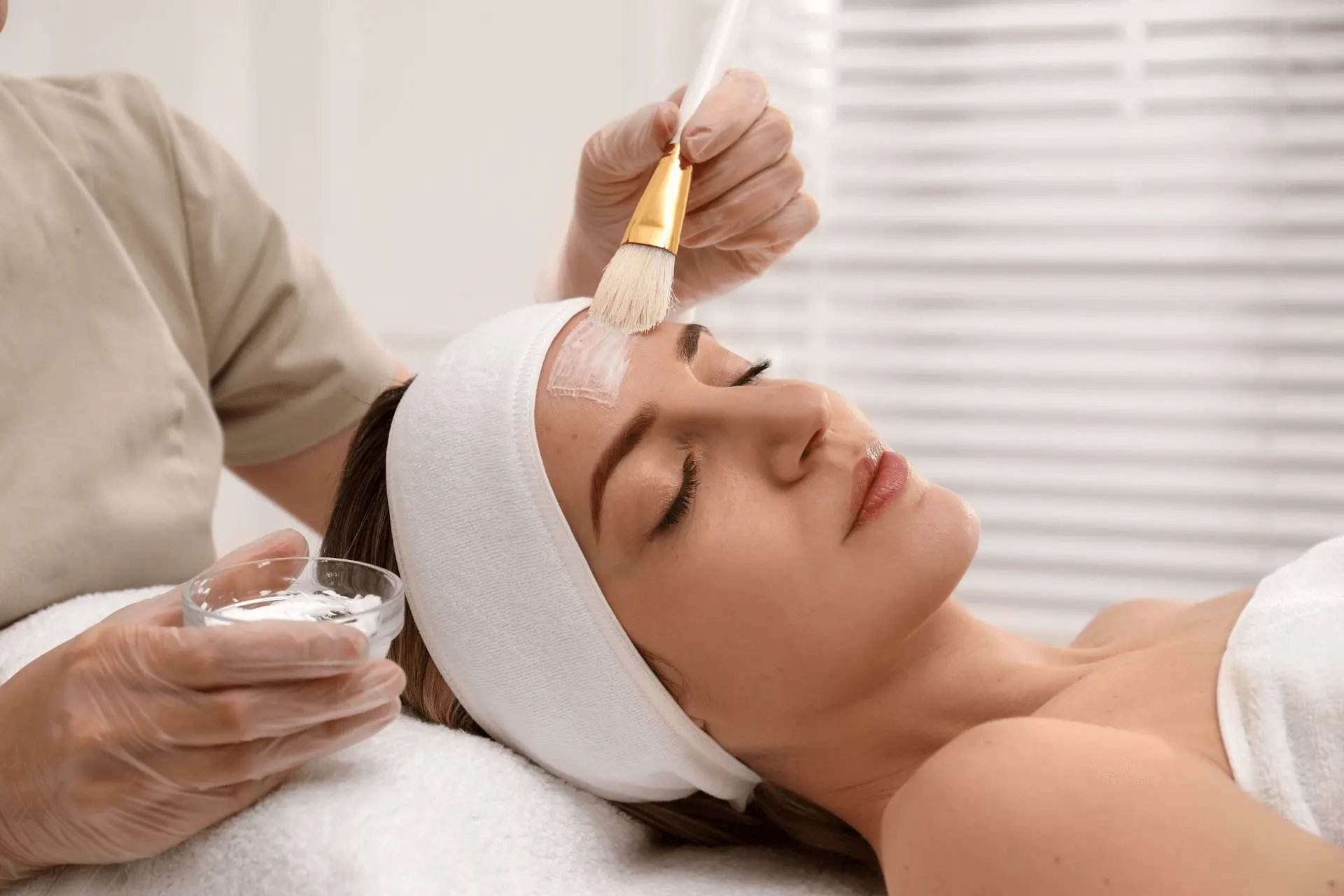
LHA Peel
By an LHA peel is meant a superficial and gentle chemical exfoliation approach formulated with LHA — that is, lipohydroxy acid. LHA is recognized as a derivative of salicylic acid and is one of the skincare ingredients most often used on oily, acne-prone skin with blackheads and clogged pores. Scientific sources note that LHA is a derivative of salicylic acid and may possess keratolytic, comedolytic, and skin-renewal-supporting properties.
In a clinical setting, an LHA-based protocol should only be planned after the skin type, acne activity, risk of pigmentation, and skin barrier have been assessed. The aim of this approach is not to aggressively strip the skin; rather, it is to help reduce pore congestion, the appearance of blackheads, dullness, and uneven skin texture through a gentler, gradual, and controlled exfoliation.
How Does Lipohydroxy Acid Work on the Skin?
LHA acid functions as a chemical exfoliant that helps dead cells separate more gradually from the upper layer of the skin. The dermatological literature notes that LHA penetrates more slowly and is associated with a more gradual, “cell-by-cell” exfoliation.
| Mechanism of Action | Expected Change |
| Gentle chemical exfoliation | The skin may appear smoother |
| Action on comedones | The appearance of blackheads and clogged pores may be reduced |
| Approach suited to oily skin | Shine and congestion may be reduced |
| Support for skin renewal | A dull, uneven appearance may be softened |
An LHA peel should not be presented as a procedure that fully treats acne, closes the pores, and completely eliminates blemishes.
A more accurate description is the following: in a suitable patient, it may help improve the appearance of the skin.
What Concerns Is an LHA Peel Used For?
An LHA-based peeling or exfoliation protocol may be considered primarily for oily, combination, and acne-prone skin. It can be particularly beneficial for mild comedonal acne, blackheads, clogged pores, and a dull skin appearance. Although the comedolytic and exfoliating properties of LHA are noted, it would not be accurate to present it as the primary treatment for every type of acne.
Oily Skin
In oily skin, shine, clogged pores, and blackheads tend to be more noticeable. LHA acid can be used as a gentle exfoliation approach suited to oily skin. The goal here is not to dry out the skin completely, but to reduce congestion and an uneven appearance.
Acne-Prone Skin
An LHA-based protocol may help improve the appearance of skin affected by mild comedonal acne, blackheads, and clogged pores. The primary goal here is not to “treat” active inflammation, but to reduce congestion, rough texture, and the appearance of comedones.
If active, pustular, painful, and inflamed acne is present, the acne must first be brought under control by a dermatologist. In such cases, peeling should not be presented as a stand-alone primary treatment.
Blackheads and Clogged Pores
Blackheads are often related to sebum, dead cells, and pore congestion. LHA-based exfoliation can soften the appearance of this congestion. However, the pores are not completely closed; they may only become less noticeable.
Dull and Uneven Skin
If the skin appears dull, rough, and has lost its vitality, a gentle chemical peel can help achieve a smoother appearance. The outcome is closely tied to home care, sunscreen use, and protection of the skin barrier after the procedure.
Who Is a Suitable Candidate for an LHA Peel?
Suitability should be determined following an examination by a dermatologist or a qualified physician-cosmetologist. The physician should assess skin type, acne activity, medications being used, barrier condition, tendency toward pigmentation, and the patient’s expectations regarding the outcome.
| Condition | Suitability |
| Oily and combination skin | May be suitable |
| Blackheads and comedones | May be considered following a physician’s examination |
| Mild comedonal acne | Depends on skin condition |
| Dull and uneven skin | May be suitable |
| Sensitive skin | Requires a more cautious protocol |
| Post-acne marks | Depends on the type of mark |
LHA may be considered a gentler exfoliation option for some patients. However, in individuals with sensitive skin, rosacea, dermatitis, eczema, and a compromised skin barrier, the procedure should only be planned after an assessment by a dermatologist.
Who Should Not Get an LHA Peel?
Although LHA is recognized as a gentler peeling approach, this does not mean it is risk-free for every skin. The procedure should be postponed, or discussed only at the physician’s discretion, in the following cases:
- Active, inflamed, and pustular acne;
- Open wounds or skin irritation;
- Active herpes infection;
- Bacterial, viral, or fungal skin infection;
- Eczema, dermatitis, and rosacea flare-ups;
- Sunburn or active tanning;
- Severe damage to the skin barrier;
- Known allergy to salicylates or to the peeling formulation used;
- Recent use of strong retinoids, acids, or scrubs;
- Concurrent use of retinoids, AHA/BHA, and scrubs together without physician guidance;
- Patients who will not use SPF after the procedure;
- Unrealistic expectations regarding the outcome.
Chemical peels can carry risks such as redness, peeling, swelling, pigment changes, infection, and, rarely, scarring. For this reason, the procedure may be postponed if the skin barrier is damaged, if active inflammation is present, or if the patient will not protect themselves from sun exposure.
During Pregnancy and Lactation
During pregnancy and lactation, this type of elective aesthetic procedure is generally postponed. The procedure may only be discussed following a physician’s assessment.
LHA Peel in Darker Skin Tones
It would not be accurate to say that LHA peeling is strictly prohibited in darker skin tones. However, in Fitzpatrick skin types IV–VI, the risk of post-inflammatory hyperpigmentation — that is, pigmentation following irritation — may be higher with any degree of irritation. The scientific literature on chemical peel complications describes risks such as pigment changes and, rarely, permanent scarring.
In darker skin types, the main goal is not to aggressively strip the skin, but to create gradual, controlled renewal while protecting the barrier. Excessive irritation can increase the risk of post-inflammatory hyperpigmentation. For this reason, an LHA-based protocol should be selected more cautiously in Fitzpatrick IV–VI skin types, and SPF use should be an integral part of the procedure.
How Should Preparation Before an LHA Peel Be Carried Out?
Preparation before the procedure is important for both the outcome and safety. The dermatologist should first assess how sensitive the skin is, whether acne is currently active, which products the patient is using, and the level of sun exposure.
Key Rules Before the Procedure
- Sunbathing and tanning beds should be avoided.
- If tanning or sunburn is present, the procedure should be postponed.
- Retinol, AHA/BHA acids, and scrubs should be discontinued as directed by the physician.
- If an active acne flare-up is present, it should first be brought under control.
- If the skin barrier is damaged, the procedure may be postponed.
- A history of herpes should be reported to the physician.
- The patient should be prepared to use SPF after the procedure.
After a chemical peel, the new skin can become more sensitive to the sun, and the necessary duration of sun protection should be discussed with the physician.
How Is the LHA Peel Procedure Performed?
Clinical LHA-based exfoliation must be carried out using a protocol suited to the skin type. Clinical application is not the same as using LHA-containing products at home. Home products are generally intended for daily or weekly skincare. In a clinical protocol, by contrast, product selection, application time, skin reaction, and aftercare are monitored by a specialist.
The process generally proceeds as follows:
- The skin is cleansed.
- The dermatologist or physician-cosmetologist assesses the skin’s reaction.
- A degreasing step is carried out if necessary.
- The LHA-containing solution or peeling system is applied.
- The skin’s reaction is monitored.
- Soothing and barrier-repairing aftercare is provided following the procedure.
- The patient is given instructions for home care.
During the procedure, mild stinging, warmth, tightness, and a burning sensation may occur. It would not be accurate to describe it as “completely painless,” since sensitivity varies from patient to patient.
Are At-Home LHA Products the Same as a Clinical LHA Peel?
LHA-containing products used at home are generally intended for daily or weekly skincare. Clinical LHA-based exfoliation, by contrast, can be a more controlled protocol, in which product selection, application time, skin reaction, and aftercare are monitored by a specialist.
When choosing a home product, skin type, other active ingredients, combined use with retinol and acids, sun protection, and barrier condition should be taken into account. An incorrect combination can increase the risk of redness, dryness, burning, acne flare-ups, and pigmentation.
Recovery Period After an LHA Peel
Although LHA-based peels are often associated with a gentler recovery, redness, dryness, sensitivity, and mild peeling are possible. Chemical peels in general can carry risks such as redness, flaking, swelling, pigment changes, infection, and, rarely, scarring.
What Can Be Expected in the First 24 Hours?
On the first day, the skin may be sensitive, reddened, and somewhat tight. During this period:
- It is safer to avoid makeup;
- Hot water, saunas, and steam are not advisable;
- Scrub and acid-based products should not be used;
- Sun exposure should be avoided;
- Active products not prescribed by the physician should not be used.
Aftercare Rules for the First 72 Hours
At this stage, the skin barrier should be protected:
- Redness and dryness may be normal;
- Mild peeling may occur;
- Flaking skin should not be picked or pulled off;
- Retinol, AHA/BHA, and strong active serums should not be started;
- A repairing moisturizer and an SPF regimen are essential.
When Can Active Products Be Resumed?
It is safer to return to retinol, acids, scrubs, and strong active serums only once the skin has calmed down and with the physician’s approval. This timeframe varies according to the skin’s reaction.
Why Is Sun Protection Important?
Sun protection is a key part of both the outcome and the safety of an LHA peel. UV rays can increase the risk of pigmentation, irritation, and uneven skin tone after the procedure. After a chemical peel, the new skin is temporarily more sensitive to the sun.
Key rules:
- A broad-spectrum sunscreen with SPF 30 or higher should be used;
- Sunscreen should be reapplied throughout the day;
- A hat and sunglasses should be worn;
- Tanning beds should be avoided;
- Beach trips and active sun-exposure plans should be postponed.
Can an LHA Peel Be Done in Summer?
It can be done in summer, but it is not suitable for every patient. Because the risk associated with summer sun, beach season, and tanning is high in the Azerbaijani climate, this decision should be made with caution.
A procedure in summer may only be considered in the following cases:
- If the patient can protect themselves seriously from the sun;
- If there is no tanning or sunburn;
- If there is no beach trip or active sun-exposure plan in the next 2–4 weeks;
- If the SPF regimen will be strictly followed;
- If the dermatologist considers the skin condition suitable.
If the patient will be going on vacation in the near future, plans to go to the beach, or will not use SPF, it is safer to schedule the procedure for the autumn-winter season.
How Many Sessions Does an LHA Peel Require?
The number of sessions varies according to the LHA protocol used, skin type, acne activity, the degree of pore congestion, and home care. For some patients, a few applications may be sufficient, while others may require a longer course of care and a more extensive session plan.
| Concern | Approach |
| Mild oiliness and dullness | Change may be visible after a few applications |
| Blackheads and clogged pores | An individualized session plan may be needed |
| Acne-prone skin | Should be planned according to acne activity |
| Uneven skin texture | Evaluated together with home care |
| Post-acne marks | Depends on the type of mark and SPF discipline |
The exact plan is determined during a dermatologist consultation. It would not be accurate to provide a guaranteed outcome in advance regarding the number of sessions.
When Does the Result Become Visible?
Initial changes can sometimes be seen after the very first session: the skin may appear cleaner, smoother, and less dull. However, for pore congestion, blackheads, and acne-prone skin, results develop in stages.
| Timeframe | Expected Change |
| First 24–48 hours | Mild redness and sensitivity |
| 3–7 days | A smoother, cleaner appearance |
| 2–4 weeks | A gradual reduction in oiliness and congestion |
| After several applications | A more stable result |
The outcome varies from one individual to another. Following proper home care, SPF use, and the physician’s recommendations directly affects the result.
Possible Risks and Side Effects of an LHA Peel
Although LHA is recognized as a gentler exfoliation approach, it can cause redness, dryness, burning, peeling, acne flare-ups, damage to the skin barrier, and a risk of post-inflammatory hyperpigmentation. It is noted that chemical peels in general can also carry risks such as pigment changes, infection, and, rarely, scarring.
Possible side effects:
- Redness;
- A burning or stinging sensation;
- Dryness;
- Mild peeling;
- Itching;
- Damage to the skin barrier;
- Temporary acne flare-up;
- Hyperpigmentation;
- Infection, in rare cases.
Most risks can be reduced through proper patient selection, an appropriate protocol, professional application, and aftercare, but they cannot be eliminated entirely.
How Can Risks Be Reduced?
To reduce risks, a correct approach before, during, and after the procedure is essential.
Key rules:
- The procedure should be carried out under the supervision of a dermatologist or a qualified physician-cosmetologist.
- Skin type and acne activity should be assessed beforehand.
- If active, inflamed acne is present, the procedure may be postponed.
- Retinol and acids should be discontinued as directed by the physician.
- Sun protection must be strictly observed.
- Flaking skin should not be picked or pulled off.
- Multiple active products should not be used at home at the same time.
- A physician should be consulted if any suspicious symptoms occur.
Warning Signs After an LHA Peel
A physician should be consulted without delay in the following cases:
- Increasing pain;
- Severe burning;
- Widespread and increasing redness;
- Purulent discharge;
- A foul odor;
- Herpes-like eruptions;
- Rapidly spreading pigmentation;
- Severe itching and swelling;
- Healing that takes longer than expected.
LHA Peel Price in Baku, 2026
The price of an LHA peel in Baku is not fixed. It can vary depending on the clinic, the product used, the number of sessions, the skin concern, the physician’s experience, and the home care prescribed alongside the procedure.
| Factor Affecting Price | Explanation |
| Skin concern | Acne, blackheads, and oiliness may require different protocols |
| Number of sessions | Affects the overall price |
| Product and protocol | The clinical product system can affect the price |
| Physician’s experience | Choosing an experienced specialist can play a role in the price |
| Home care | Repairing and SPF products may be priced separately |
| Combination procedures | Acne treatment, Hydrafacial, or other procedures may be added |
The price of an LHA peel in Baku is determined during a dermatologist consultation, based on skin condition, the depth of the concern, the number of sessions, and the protocol used.
Before an exact price is given, skin type, whether active acne is present, the product system used, and home care needs should be evaluated.
How Does an LHA Peel Differ from Other Procedures?
LHA peeling differs from other peeling and skin resurfacing procedures in its mechanism of action, penetration rate, depth of effect, and suitability for specific skin concerns. LHA is considered a lipophilic derivative of salicylic acid and can provide a slower, gradual exfoliating effect on the skin. For this reason, it can be considered for skin prone to oiliness, blackheads, comedones, and clogged pores. Salicylic, glycolic, and TCA peelings, on the other hand, differ based on their acid type, potency, potential for irritation, and recovery time. Hydrafacial is evaluated more as a cleansing, extraction, and hydration-oriented procedure rather than a classic chemical peeling. Therefore, the choice should be made based on skin type, active acne, sensitivity, risk of pigmentation, and the dermatologist’s clinical evaluation, rather than the name of the procedure.
LHA Peel vs. Salicylic Acid Peel
LHA is recognized as a derivative of salicylic acid and can be distinguished by its gentler, more gradual exfoliation properties. A salicylic acid peel, on the other hand, is a more widely used approach for oily and acne-prone skin. Which option is suitable should be determined based on skin type, acne activity, sensitivity, and a dermatologist’s assessment.
LHA Peel vs. Glycolic Acid Peel
A glycolic acid peel is an AHA-based chemical peel and can be considered primarily for dullness, uneven tone, and superficial skin renewal. An LHA-based protocol, on the other hand, may be chosen as a more targeted approach for skin prone to oiliness, blackheads, clogged pores, and comedones.
LHA Peel vs. TCA Peel
A TCA peel is a stronger chemical peel that can produce a deeper effect. An LHA-based peel, by contrast, is a gentler, more superficial exfoliation approach. For deep pigmentation, scarring, and severe texture problems, TCA or other procedures may be more suitable, although their recovery time and risks also differ.
LHA Peel vs. Hydrafacial
Hydrafacial is used primarily for cleansing, hydrating, and lightly renewing the skin. An LHA-based protocol, on the other hand, is a chemical exfoliation approach. In some patients, these procedures may be scheduled by the physician at different times or for different purposes.
Frequently Asked Questions
Is an LHA Peel Safe?
An LHA peel can be a beneficial and relatively safe approach when carried out with proper patient selection, an appropriate protocol, professional application, and correct aftercare. That said, it does carry risks of redness, dryness, burning, peeling, acne flare-ups, and pigmentation.
What Is an LHA Peel?
An LHA peel is a superficial and gentle chemical exfoliation approach formulated with lipohydroxy acid. Following a physician’s assessment, it may be considered primarily for skin that is oily, acne-prone, and prone to clogged pores.
Does an LHA Peel Help with Acne?
It can help improve the skin’s appearance in cases of mild comedonal acne, blackheads, and clogged pores. In active, pustular, and inflamed acne, dermatologist treatment may be required first.
Is an LHA Peel Different from a Salicylic Acid Peel?
Yes. LHA is recognized as a derivative of salicylic acid and is described as having a more gradual, gentler exfoliation property. The appropriate choice is determined based on skin type, acne activity, and a dermatologist’s assessment.
Who Should Not Get an LHA Peel?
It may not be suitable in cases of active inflamed acne, open wounds, active infection, eczema or dermatitis flare-ups, sunburn, active tanning, and a damaged skin barrier.
Can an LHA Peel Be Done in Summer?
In summer, it may only be considered for patients who can protect themselves seriously from the sun. If tanning, sunburn, or an upcoming beach trip is a factor, it is safer to postpone the procedure.
Are At-Home LHA Products the Same as a Clinical LHA Peel?
No. Home products are intended for gentler, daily or weekly care. In a clinical protocol, product selection, application time, and skin reaction are monitored by a specialist.
Conclusion
An LHA peel is a gentle chemical exfoliation approach that may be considered, following a physician’s examination, for skin that is oily, acne-prone, and prone to blackheads and clogged pores. With a properly selected protocol, the skin may appear smoother, cleaner, and more balanced.
This procedure should not be regarded as simple home care. Skin type, acne activity, tendency toward pigmentation, skin barrier condition, sun exposure, and the active products used must all be taken into account by the dermatologist.
The key requirements for a good outcome are the following: an individual skin assessment, an LHA protocol suited to the skin type, proper aftercare, and sun protection.
Whether an LHA peel is suitable for your skin type is determined following a dermatologist’s examination.
For an individual assessment, you may book a consultation with Dr. Rashad Isayev.