
Picosecond laser
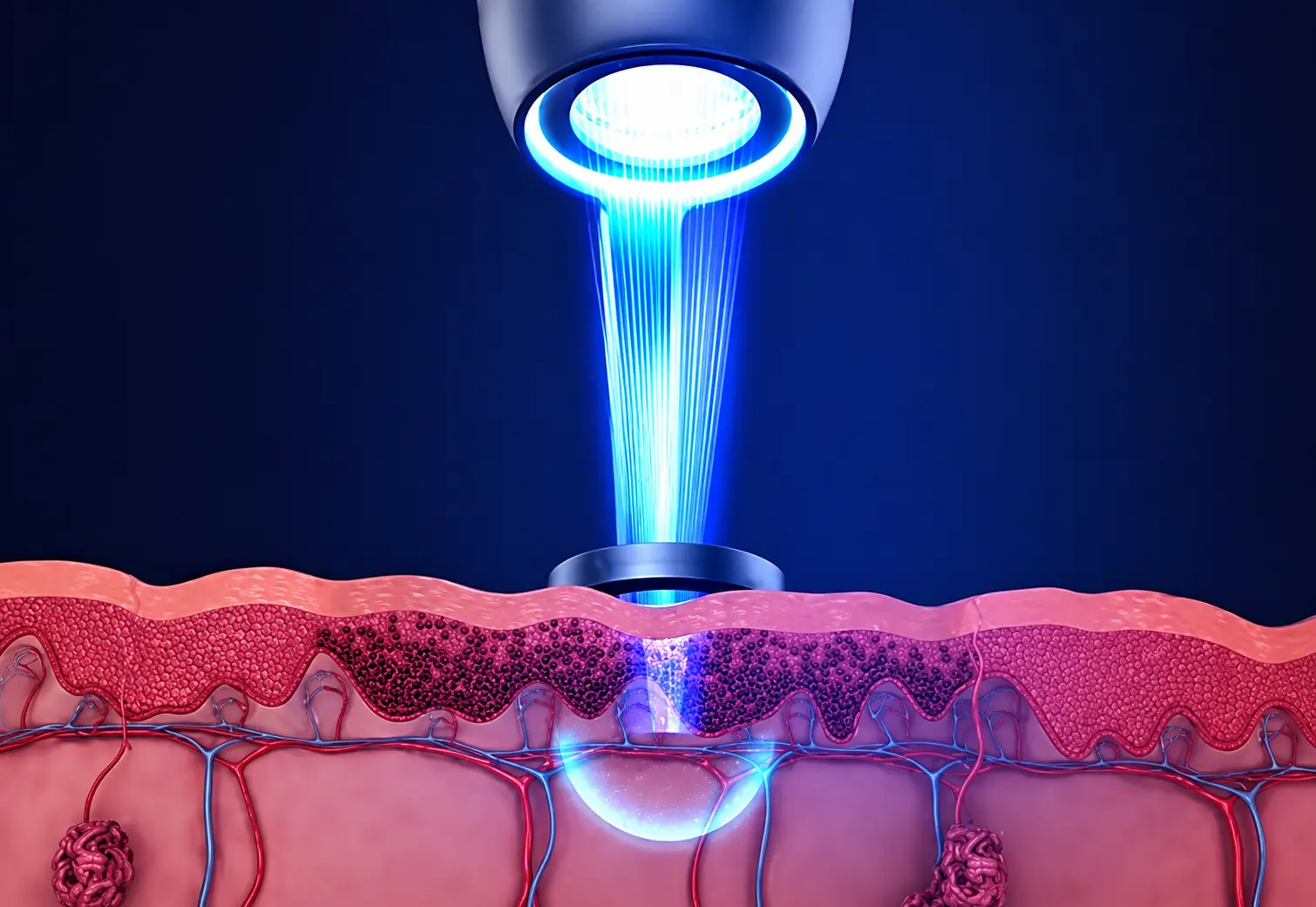
Picosecond laser is one of the modern laser technologies used for tattoo removal, permanent makeup pigment, facial spots, post-acne spots, and certain pigmentation problems. This procedure is applied not to “peel” the skin, but to shatter the pigment and tattoo ink into much finer particles using very short pulses.
Disclaimer: This article is intended for educational purposes. Whether the picosecond laser procedure is suitable for your skin, tattoo color, or spot type can only be determined after a thorough examination by a dermatologist.
What is a picosecond laser?
The picosecond laser is a laser technology that operates with exceedingly short pulses. It is primarily used to target tattoo ink, permanent makeup pigment, and certain skin spots. The goal of this laser is not to peel the skin, but to break the pigment particles down into smaller pieces.
It is also commonly known as a “pico laser.” The term “pico” indicates that the laser pulse is delivered in an extremely short duration (a picosecond). This technology transmits high-speed energy to the tattoo ink and pigment particles, ultimately shattering the pigment into finer fragments.
These fragmented particles are then gradually eliminated over time by the body’s natural clearance mechanisms. Therefore, the results are not visible in a single day, but appear progressively between sessions. The picosecond laser can be utilized for tattoo and pigment removal, as well as for certain skin rejuvenation purposes. The outcome depends on the tattoo color, pigment depth, skin tone, device wavelength, energy settings, and post-procedure care.
What problems is the picosecond laser used for?
The picosecond laser can mainly be used for tattoo removal, permanent makeup pigment, sunspots, post-acne spots, and reducing the appearance of certain pigment lesions. With fractional handpieces available on some devices, it is also possible to address pore size and skin texture appearance.
While the application range of this procedure is broad, the same results should not be expected for every spot or tattoo. The critical first step is to accurately identify the nature of the problem.
| Problem | Purpose of Use |
| Tattoo removal | Gradual lightening of the tattoo ink |
| Permanent makeup | Careful evaluation with a test pulse |
| Sunspots | Reducing the appearance of pigment |
| Post-acne spots | Softening the tone of the spot |
| Melasma | As part of a comprehensive, complex approach |
| Pigment spots | Individualized approach based on the spot type |
| Uneven skin tone | Achieving a more even tone appearance in suitable cases |
The first step in spot treatment is understanding the underlying cause of the spot. Sunspots, post-inflammatory hyperpigmentation, melasma, and dermal pigment are not treated with the identical protocol. Applying a laser to pigmented lesions of unknown origin is incorrect. In such instances, a prior dermatological examination and, if necessary, a dermoscopic evaluation must be conducted.
How is laser tattoo removal performed?
During picosecond laser tattoo removal, the laser targets the tattoo ink with very short pulses. These pulses shatter the pigment into tiny particles, causing the tattoo to gradually fade between sessions. A complete removal is never guaranteed, as the final result heavily depends on the tattoo’s color and depth.
Tattoo removal is one of the most common applications of the picosecond laser. Black and dark-colored tattoos typically yield a better response. Colored tattoos can be more challenging. Specifically, green, yellow, light blue, and mixed tones may require significantly more sessions.
Permanent makeup demands extra caution. Certain permanent makeup pigments may paradoxicaly darken after laser exposure. For this reason, performing a test pulse should be thoroughly discussed for eyebrow, lip, and periocular (eye area) permanent makeup. In areas close to the eyes, protective measures become exceptionally vital.
Can a tattoo be completely removed?
In some cases, a tattoo can fade considerably, but complete removal is not always possible. The outcome depends on the color of the tattoo ink, its depth, the type of dye used, any previous removal procedures, the patient’s skin type, and their immune system response. Therefore, realistic expectations must be established with the patient beforehand.
One of the most frequently asked questions by patients is: “Will the tattoo completely disappear?” It is medically incorrect to give a uniform answer to everyone for this question. Some black tattoos fade exceptionally well. However, some colored, older, or deeply placed tattoos may leave behind a residual shadow. Tattoo removal is conducted as a course of sessions, and the lightening of the pigment is progressively evaluated after each session.
Can pico laser reduce facial spots?
The pico laser can help reduce the appearance of certain spots. However, it is misleading to state that it “completely removes the spot” or “eliminates it in a single session.” The cause of the spot, its depth, the skin type, sun protection habits, and home care routines significantly impact the final result.
In the treatment of facial spots, the most crucial stage is the diagnosis. Spots resulting from sun exposure, post-acne inflammation, hormonal factors, or dermal pigment require fundamentally different clinical approaches.
The picosecond laser can be considered for some sunspots and post-acne pigmentation. Conversely, a much more cautious approach is necessary for conditions with a high risk of recurrence, such as melasma. The use of SPF is an inseparable component of spot treatment. If sun protection is inadequate, the spot may darken again post-laser, or entirely new pigmentary changes may develop.
How suitable is pico laser for sunspots?
For sunspots, the picosecond laser can help reduce the appearance of the lesion in certain patients. However, the result is dependent on the depth of the spot, the skin color, and consistent SPF usage. If sun protection is weak, the spot can darken once again.
Sunspots are generally associated with long-term UV exposure and are most commonly seen on the face, back of the hands, neck, and décolleté areas. Before applying the laser, it is imperative to evaluate whether the spot is benign. If there is a suspicious pigmented lesion, a dermatological examination is mandatory prior to any aesthetic laser treatment.
Does pico laser help with post-acne spots?
In appropriate cases, the pico laser can help diminish the appearance of brown and dark spots left behind by acne. However, if there is active, purulent, and painful acne present, it is medically more correct to bring the active acne under control first.
Red marks and brown spots are entirely different problems. Brown spots remaining after acne are often related to post-inflammatory hyperpigmentation (PIH). These spots tend to persist much longer in darker skin types. Red marks, on the other hand, are mostly associated with a vascular reaction and post-inflammatory erythema. Therefore, the same laser protocol cannot be indiscriminately applied to every mark.
For deep acne scars, the pico laser alone may not be sufficient. In such cases, fractional CO₂ laser, microneedling, or combined protocols should be separately evaluated.
Is picosecond laser used for melasma?
For melasma, the picosecond laser should not be viewed as a first-line choice, but rather as part of a highly cautious and comprehensive treatment approach. The primary objective is not to aggressively “erase” the spot, but to keep the pigment under strict control through SPF, topical treatments, and dermatological supervision.
Melasma is a pigmentary disorder prone to recurrence. Sun exposure, hormonal factors, heat, and skin irritation can easily trigger a melasma flare-up. Consequently, utilizing aggressive energy settings in melasma can be highly risky. Incorrect parameters may lead to paradoxical darkening of the spot.
The core principle in treating melasma is a calm, phased, and dermatologist-monitored plan. The decision to proceed with laser therapy should only be made after a meticulous evaluation of the skin type and spot depth.
Who might the picosecond laser be suitable for?
The picosecond laser can be considered for individuals wishing to remove tattoos, those with permanent makeup pigment, sunspots, post-acne spots, and individuals troubled by certain pigment problems. Suitability must only be determined following a formal examination by a dermatologist.
Before deciding on the procedure, the physician must evaluate the skin type, pigment type, tattoo color, risk of post-inflammatory pigmentation, and the patient’s overall expectations from the result.
The picosecond laser may be discussed in the following cases:
- Individuals wishing to have a tattoo removed;
- Patients with permanent makeup pigment;
- Individuals with sunspots;
- Patients with post-acne spots;
- Those concerned about specific pigment spots;
- Individuals suffering from uneven skin tone;
- Patients deemed clinically suitable by a dermatologist.
The patient’s expectations must be firmly grounded in reality. The procedure can help reduce the appearance of spots and tattoos, but absolute guarantees of complete removal or total tone equalization should never be promised.
For whom is the picosecond laser NOT suitable?
The picosecond laser may not be appropriate in cases of active infection, open wounds, sunburn, active tanning, use of photosensitive medications, predisposition to keloids, pregnancy, and the lactation period. Furthermore, lasers must never be applied to pigmented lesions of unknown origin without a comprehensive dermatological evaluation.
Laser procedures must not be perceived as simple cosmetic skin care. Incorrect patient selection significantly elevates the risk of burns, spots, color alterations, and scarring.
The procedure may be postponed or only discussed under strict medical discretion in the following scenarios:
- Active herpes infection;
- Active bacterial, viral, or fungal skin infections;
- Open wounds and irritated skin;
- Sunburn or an active tan;
- Predisposition to keloids and hypertrophic scarring;
- Use of photosensitive medications;
- Pregnancy and the lactation period;
- Unrealistic expectations regarding the outcome;
- Pigmented skin lesions of unknown origin.
Applying a laser to a suspicious pigmented lesion without a dermoscopic examination is strictly prohibited. This is a matter of critical medical safety, not aesthetics.
Is pico laser dangerous for dark skin types?
The pico laser is not strictly contraindicated for darker skin types, but it demands a far more cautious treatment plan. In Fitzpatrick skin types IV–VI, the risks of post-inflammatory hyperpigmentation and hypopigmentation are notably higher. Therefore, performing a test pulse, selecting lower energy settings, and strictly enforcing an SPF regimen are of paramount importance.
For the Azerbaijani audience specifically, the prevalence of darker skin types coupled with the intense summer sun must be carefully taken into consideration. Applying a laser to tanned skin can dramatically increase the risk of hyperpigmentation.
For dark skin types, the objective is not an aggressive, rapid result, but a strictly controlled, phased approach. In some cases, a longer but significantly safer course plan may be selected.
How should preparation before the procedure be?
A dermatologist consultation is imperative prior to a picosecond laser procedure. The physician must evaluate the tattoo or spot, determine the skin type, thoroughly explain the risks, and inquire about lifestyle factors such as sun exposure, medication use, history of infections, and patient expectations.
The preparatory phase is vital for the safety of the procedure. During this stage, both the lesion is clinically assessed, and the patient’s immediate plans are reviewed.
Important considerations prior to the procedure include:
- Avoiding sunbathing and solariums;
- Postponing the procedure if a tan is present;
- Never applying laser to sunburned skin;
- Informing the doctor about any photosensitive medications;
- Treating any active infections before proceeding;
- Discussing a test pulse for permanent makeup removal;
- Establishing realistic expectations regarding the number of sessions required for tattoo removal.
Practical example: If a patient plans to visit the seaside, be exposed to active sun, or cannot commit to using SPF within the upcoming 4–6 weeks, postponing the procedure is the medically safer choice. This decision is made to mitigate severe risks rather than just optimizing the result. Tanned and sun-damaged skin is significantly more reactive and sensitive to laser energy.
How is the picosecond laser procedure performed?
The picosecond laser procedure must be performed in a clinical setting under direct physician supervision. The skin or tattooed area is evaluated, a test pulse is administered if deemed necessary, specific eye protection is worn, and the laser is applied in phases once the appropriate wavelength and energy parameters are selected.
Unprofessional execution drastically increases the risks of burns, spots, infections, and scarring. Therefore, the procedure must only be performed by an experienced specialist.
The process generally unfolds as follows:
- The skin or tattoo area is thoroughly cleansed.
- The dermatologist evaluates the pigment and skin type.
- A test pulse is performed if clinically indicated.
- Appropriate eye protection is utilized.
- The precise wavelength and energy settings are determined.
- The laser is applied to the target area in a phased manner.
- Post-procedure cooling and soothing care are administered.
- The patient is provided with detailed home care instructions.
Eye protection is strictly mandatory during all laser procedures. This protocol is exceptionally critical when treating the face, eyebrows, periocular areas, and permanent makeup.
What is a test pulse and why is it done?
A test pulse (or test patch) is the application of the laser on a very small, localized area to evaluate the specific reaction of the skin and the pigment. Particularly for permanent makeup, colored tattoos, darker skin types, and patients prone to melasma, a test pulse aids the physician in selecting significantly safer parameters.
A test pulse is not strictly mandatory for every single patient, but it is highly beneficial in high-risk scenarios. Permanent makeup pigments, for instance, can sometimes undergo paradoxical darkening post-laser. Thus, observing the localized reaction before treating the entire area is the most medically sound approach.
How does recovery progress after picosecond laser?
The skin’s reaction post-picosecond laser varies depending on the fundamental purpose of the procedure. For tattoo removal, erythema (redness), swelling, crusting, and blistering are more commonly observed. For spot treatments, mild redness, slight swelling, and a temporary darkening of the spot may occur.
The recovery trajectory is not identical for tattoo removal and spot treatment. The physiological reaction tends to be substantially stronger in tattooed areas.
Rules to strictly adhere to within the first 24 hours:
- Do not scratch or pick at the treated area;
- Hot water exposure and saunas are strongly discouraged;
- Do not expose the area to direct sunlight;
- Do not use any skincare products not explicitly prescribed by the doctor;
- The tattoo removal site must be kept impeccably clean;
- If blisters form, do not puncture or pop them under any circumstances.
Possible side effects following the procedure include pain, redness, edema, crusting, blistering, scarring, and pigmentary alterations. These potential reactions must be thoroughly explained to the patient beforehand.
Why is sun protection important?
Sun protection is the cornerstone of both the efficacy and safety of the picosecond laser post-procedure. UV radiation can induce an exacerbation of the spots, color alterations, delayed wound healing, and the manifestation of entirely new pigmentary disorders.
SPF is imperative not only for spot treatments but equally for post-tattoo removal care. The laser-treated area is in a state of heightened sensitivity during the physiological recovery phase.
Core guidelines:
- A broad-spectrum sunscreen of SPF 30 or higher must be strictly utilized;
- Sunscreen must be reapplied meticulously throughout the day;
- Protective clothing, such as hats and sunglasses, should be worn;
- Solariums must be entirely avoided;
- Plans involving the sea and intense sun exposure must be postponed.
For darker skin types, rigorous sun protection is even more critical. In this demographic, the intrinsic risk of post-inflammatory hyperpigmentation following the procedure is substantially elevated.
Can picosecond laser be done in summer?
The picosecond laser can theoretically be performed in the summer, but it is not suitable for every patient. Given the climate in Azerbaijan, the risks associated with the intense summer sun, the seaside season, and tanning are exceptionally high. Therefore, the procedure should only be considered for patients who can unequivocally commit to rigorous sun protection and have been clinically approved by a dermatologist.
The primary risk during the summer months is uncontrolled UV exposure. Tanning and sunburn dramatically increase the risk of post-procedure hyperpigmentation.
Performing the procedure in summer can only be considered under the following strict criteria:
- The patient can rigorously protect themselves from the sun;
- There is absolutely no active tan or sunburn present;
- There are no plans to visit the seaside for the upcoming 4–6 weeks;
- There will be strict, uncompromising adherence to an SPF regimen;
- The dermatologist assesses the current skin condition as fully suitable.
If a patient’s occupation involves outdoor work and they are unable to reapply SPF throughout the day, it is significantly safer to postpone the procedure until the autumn-winter season.
How many sessions does picosecond laser require?
The total number of required picosecond laser sessions varies drastically based on the objective. Tattoo removal routinely necessitates a higher number of sessions. For spot and pigment treatments, the session count is individualized based on the spot’s classification, depth, patient’s skin type, the specific device parameters used, and the skin’s physiological response.
It is very often impossible to predict the exact number of sessions required beforehand. In tattoo removal specifically, the clinical results are evaluated progressively in phases.
| Problem | Estimated Session Approach |
| Small black tattoo | 3–8+ sessions |
| Large and multi-colored tattoo | 6–12+ sessions |
| Permanent makeup | Test pulse and an individualized plan |
| Sunspots | 1–4 sessions |
| Post-acne spots | 2–5 sessions |
| Melasma | Highly cautious, strictly individualized approach |
| Pigment spots | Varies according to the specific type of spot |
These figures serve solely as an approximate guideline. A definitive session plan must only be established following a comprehensive dermatologist consultation and the clinical evaluation of the initial post-treatment reaction.
What does the price of picosecond laser in Baku depend on?
The pricing for picosecond laser procedures in Baku is not fixed. The cost can fluctuate based on the tattoo’s dimensions and color, the specific classification of the spot, the anatomical area being treated, the technical caliber of the device, the clinical experience of the dermatologist, and the total required number of sessions. The exact price is determined exclusively during the consultation.
While the financial aspect is understandably important to the patient, merely quoting a number is clinically inadequate. A minor black tattoo and a massive multi-colored tattoo fundamentally do not demand the same treatment plan or resources.
| Factor Affecting Price | Explanation |
| Tattoo size | Larger tattoos invariably demand more clinical time and a higher number of sessions. |
| Tattoo color | Multi-colored tattoos can be considerably more resistant to fading. |
| Type of spot | Sunspots, melasma, and PIH demand completely different clinical approaches. |
| Anatomical area | The face, hands, neck, and body regions may be priced differently. |
| Number of sessions | Directly impacts the cumulative overall cost. |
| Device quality | The utilization of modern, high-tier pico laser systems can factor into pricing. |
| Specialist experience | Selecting a highly experienced dermatologist can reflect on the price. |
The price of a picosecond laser treatment in Baku is calculated on an individual basis relative to the specific tattoo or spot type. You may book a formal consultation with Dr. Rəşad İsayev to establish a personalized treatment plan and determine the associated cost.
How does picosecond laser differ from other procedures?
The picosecond laser primarily targets pigment and tattoo ink. Modalities such as the Q-switched laser, IPL, CO₂ laser, and chemical peels operate via fundamentally different physical mechanisms. The clinical choice must be made by a dermatologist based on the spot’s classification, the tattoo’s color, the patient’s skin type, and the overarching therapeutic objective.
Not every procedure is suitable for every objective. Tattoo removal, melasma, sunspots, acne scarring, and overall skin texture all require distinctly different clinical approaches.
| Comparison | Main Difference |
| Picosecond vs. Q-switched Nd:YAG | Pico laser operates with picosecond pulses, whereas Q-switched utilizes nanosecond pulses. |
| Picosecond vs. IPL | IPL is not a classical laser; it operates utilizing a broad spectrum of light. |
| Picosecond vs. CO₂ laser | CO₂ is predominantly utilized for skin resurfacing, deep scarring, and texture improvement. |
| Picosecond vs. Chemical peel | Peels induce chemical exfoliation, whereas pico laser targets pigment directly with light energy. |
Possessing the newest technology does not inherently guarantee it is the best option for every patient. The paramount factor is always the accurate clinical diagnosis and the selection of the correct, safe parameters.
What is the difference between Pico laser and Q-switched laser?
The Pico laser operates with picosecond pulses, while the Q-switched laser operates with nanosecond pulses. The ultra-short picosecond pulses can shatter certain tattoo inks and pigment particles into much finer fragments. However, this does not automatically translate to a superior clinical result for every single tattoo or spot.
The clinical choice is dictated by the tattoo’s color, the depth of the pigment, the skin type, and the device’s technical parameters. In certain clinical scenarios, a Q-switched laser may actually be the more appropriate choice. The ultimate objective is always to select the safest and most medically sound approach for the specific patient.
Are Pico laser and IPL the same thing?
No, the pico laser and IPL (Intense Pulsed Light) are fundamentally different. IPL utilizes a broad spectrum of light and is not classified as a classic laser. For tattoo removal, IPL is strictly considered an inappropriate choice. For pigment treatment, the choice must be dictated by the nature of the spot and the skin type.
IPL can be utilized for certain superficial pigmentary and vascular concerns. However, it is not the correct modality for targeting tattoo ink. The picosecond laser, conversely, targets pigment and tattoo fragments with highly specific, ultra-short pulses. Therefore, their clinical indications are entirely distinct.
How does Pico laser differ from CO₂ laser?
The CO₂ (Carbon Dioxide) laser is predominantly utilized for deep skin resurfacing, heavy scarring, severe texture irregularities, and deep wrinkles. The picosecond laser, in contrast, primarily targets pigment and tattoo ink. For deep acne scars and textural issues, these two procedures are evaluated with entirely different clinical objectives in mind.
For deeply pitted acne scars, the pico laser alone may prove insufficient. In such instances, fractional CO₂ lasers, clinical microneedling, or alternative resurfacing modalities may be discussed. If the primary clinical concern is pigment or a tattoo, the pico laser may be the superior choice. However, this decision must only be rendered following a comprehensive dermatologist examination.
What are the risks and side effects of the picosecond laser?
While the picosecond laser can be highly beneficial with precise patient selection and professional execution, it is not a risk-free procedure. Potential adverse events include erythema (redness), swelling, pain, blistering, crusting, hyperpigmentation, hypopigmentation, localized infection, residual pigment, and, in rare instances, scarring.
The vast majority of these risks can be significantly mitigated through stringent patient selection, utilization of the correct wavelength, cautious energy titration, administering test pulses, mandatory eye protection, and rigorous post-procedure care. However, the risk can never be completely reduced to zero.
Possible side effects:
- Redness (Erythema)
- Swelling (Edema)
- A burning sensation
- Pain
- Blistering
- Crusting/Scabbing
- Temporary darkening of the lesion
- Hyperpigmentation
- Hypopigmentation
- Paradoxical darkening of tattoo color
- Residual pigment shadows
- Infection
- Rarely, permanent scarring
- Risk of severe eye damage (if unprotected)
The patient must be comprehensively educated about these risks prior to the procedure. Establishing realistic expectations regarding the final outcome is an integral component of a safe medical treatment plan.
In what situations should one consult a doctor?
If, following the procedure, the pain progressively intensifies, or if you observe purulent (pus-like) discharge, a foul odor, severe blistering, rapidly expanding redness, fever, a severe allergic reaction, or a rapid, dramatic darkening of the spot, you must consult your dermatologist immediately. These clinical signs may indicate a deviation from the normal physiological recovery process.
Do not delay seeking medical attention if you experience:
- Progressively worsening pain
- Purulent discharge
- A foul odor from the treated site
- Fever
- Extensive or large blisters
- Rapidly expanding redness
- Prolonged inflammation that does not subside
- A severe allergic reaction
- Rapid, stark darkening of the treated spot
- A healing process that is extending significantly beyond the expected timeframe
While these symptoms do not universally equate to a severe complication, they unequivocally demand professional medical evaluation.
Why is a dermatologist consultation important?
The picosecond laser is a medical-aesthetic procedure precisely engineered to target pigment and tattoo ink. Critical variables such as skin type, spot classification, tattoo color, pigment depth, concurrent medication use, historical sun exposure, and intrinsic risks must be meticulously evaluated by a qualified dermatologist. This clinical approach is indispensable for both achieving optimal results and ensuring absolute patient safety.
A professional consultation entails far more than merely executing the procedure. The paramount phase is making the correct clinical decision: Does this specific spot actually require a laser? Which wavelength will this tattoo respond best to? What is the quantifiable risk profile for this patient?
In Dr. Rəşad İsayev’s dermatological practice, the procedure is rigorously individualized according to the patient’s specific skin type and the precise nature of the clinical problem. This approach simultaneously grounds expectations in clinical reality and drastically minimizes the risk of unnecessary irritation and post-inflammatory pigmentation.
To ascertain whether a picosecond laser procedure is medically suitable for your specific tattoo or spot, you may book an appointment for a consultation with Dr. Rəşad İsayev.
Frequently Asked Questions (FAQ)
What is a Pico laser?
The pico laser is a sophisticated laser technology operating with ultra-short picosecond pulses. It is predominantly used to reduce the appearance of tattoos, permanent makeup pigment, facial spots, and certain pigment disorders. Its suitability is strictly determined based on the patient’s skin type and the specific nature of the pigment.
Is the picosecond laser used to remove tattoos?
Yes, the picosecond laser can be effectively utilized for tattoo removal. The laser shatters the tattoo ink into microscopic fragments, allowing the tattoo to gradually lighten between sessions. However, a complete removal is never guaranteed, and multiple sessions are inherently required.
How many sessions does laser tattoo removal take?
The required number of sessions for laser tattoo removal hinges on the tattoo’s size, color, depth, the specific chemical composition of the ink used, and the skin’s physiological response. Minor black tattoos may occasionally require 3–8+ sessions, whereas extensive and multi-colored tattoos can demand 6–12+ sessions.
Does the pico laser remove facial spots?
The pico laser can significantly help in reducing the visual prominence of certain spots. However, it is clinically inaccurate to claim it “completely removes” them or provides a “guaranteed result.” The exact classification of the spot must first be diagnosed by a dermatologist, after which an appropriate, targeted treatment plan can be selected.
How much does the picosecond laser cost in Baku?
In Baku, the pricing for a picosecond laser treatment fluctuates based on tattoo size and color, the classification of the spot, the anatomical region treated, the specific device utilized, the specialist’s level of expertise, and the total number of sessions. An accurate cost assessment can only be provided following a comprehensive consultation and initial clinical evaluation.
Is tattoo removal painful?
During tattoo removal, sensations of pricking, heat, stinging, and burning may be experienced. This sensation is generally reported to be more uncomfortable compared to standard spot treatments. The intensity of the pain is dependent on the anatomical location of the tattoo, its size, the color density, and the patient’s individual pain threshold.
What is the difference between a Pico laser and a Q-switched laser?
A Pico laser delivers energy in picosecond pulses, while a Q-switched laser utilizes nanosecond pulses. The picosecond pulses can occasionally shatter certain pigments and inks into finer particles. However, the ultimate clinical choice must always be dictated by the skin type, tattoo color, and specific device parameters.
Can Pico laser be done in the summer?
While pico laser can be performed in the summer, the procedure must be immediately postponed if the patient presents with a tan, a sunburn, or imminent plans involving seaside exposure. In the Azerbaijani climate, rigorous sun protection is absolutely critical. The clinical risks escalate substantially for patients who cannot strictly adhere to an SPF regimen.
Can Pico laser cause spots on dark skin?
Yes, in darker skin types, the inherent risk of both hyperpigmentation and hypopigmentation is substantially elevated. Consequently, performing a test pulse, utilizing highly cautious energy parameters, and enforcing strict sun protection are mandatory. The procedure must only be planned following a thorough evaluation by a dermatologist.
What is forbidden after a picosecond laser treatment?
Following the procedure, patients must absolutely avoid direct sun exposure, solariums, saunas, hot showers, picking at crusts/scabs, and applying any active skincare products not explicitly prescribed by their physician. The treated area must be kept meticulously clean, and any irritating physical behaviors must be entirely avoided during the recovery phase.
Can permanent makeup be removed with a pico laser?
Permanent makeup can be treated with a pico laser, but it demands an exceptionally cautious clinical approach. Certain cosmetic pigments may paradoxically darken following laser exposure. Therefore, for eyebrow and lip permanent makeup, a test pulse and a highly individualized treatment plan must be discussed in detail with the dermatologist.
When are the results visible after a picosecond laser?
The final results are never fully visible immediately. In tattoo removal, the targeted pigment lightens gradually over the weeks between sessions. In spot treatments, the initial clinical changes may only be noticeable after the primary recovery period has concluded. The final outcome is heavily dependent on skin type, pigment depth, and strict adherence to post-care protocols.
Is it worth getting a picosecond laser?
For the clinically appropriate patient, the picosecond laser can be highly beneficial in addressing tattoo removal, permanent makeup pigment, sunspots, post-acne spots, and specific pigmentary disorders. However, the modality should only be selected after a rigorous medical evaluation of the skin type, spot classification, tattoo color, and associated clinical risks.
In properly selected patients, it can successfully aid in lightening tattoo pigment, diminishing the visual appearance of certain spots, and promoting a more uniform skin tone. Nevertheless, the procedure is absolutely not suitable for everyone.
For optimal clinical outcomes, three core principles are mandatory:
- A formal dermatologist consultation alongside an individualized evaluation of the pigment.
- The selection of clinical parameters tailored precisely to the skin type, coupled with mandatory, proper eye protection.
- Uncompromising adherence to post-procedure care protocols and rigorous sun protection.
While the majority of clinical risks can be substantially mitigated through correct patient selection, appropriate parameter titration, and diligent post-procedure care, they can never be entirely eliminated.
To determine if the picosecond laser procedure is the medically appropriate intervention for your specific spots or tattoo, you may schedule a clinical consultation with dermatologist Dr. Rəşad İsayev.