
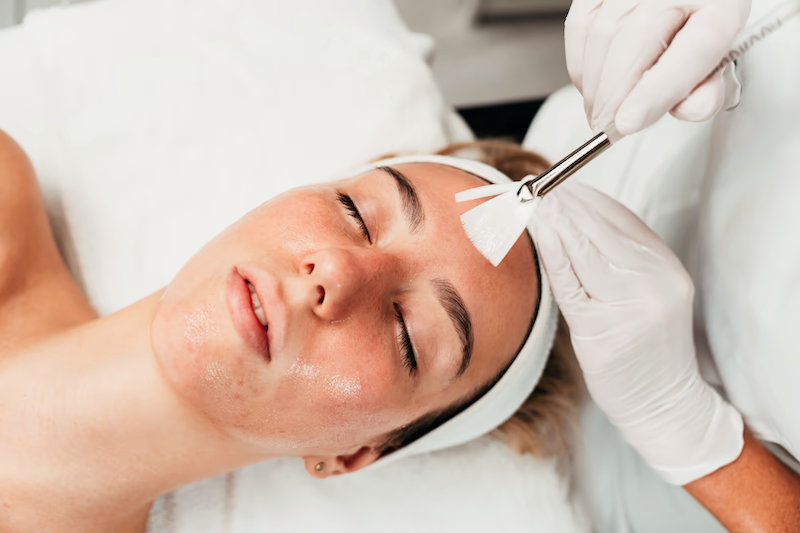
Salicylic Acid Peel
A salicylic acid peel is a superficial chemical peel method that can be considered as an adjunctive dermatological procedure for oiliness, congested pores, blackheads and whiteheads, as well as selected mild and moderate acne cases.
Salicylic acid possesses oil-soluble properties. Therefore, in addition to dead cells on the skin surface, it can also affect cellular accumulation in sebum-rich follicular areas.
This property makes salicylic acid one of the chemical exfoliants particularly utilized in skin prone to comedones and pore congestion.
However, not every acne lesion is suitable for a salicylic peel. Blackheads, closed comedones, superficial inflammatory acne, deep nodules and cysts, post-acne marks, and acne scars are distinct problems.
The purpose of a dermatological evaluation is to differentiate these changes from one another and determine whether a peel is truly necessary in that patient’s treatment plan.
At-home salicylic acid serums and cleansers are not identical to clinical chemical peels. In clinical application, alongside concentration, the product’s pH, application area, contact time, number of layers, and skin response are also taken into account.
This article serves educational purposes. Individual diagnosis and treatment plans must be prepared based on a dermatological evaluation.
What is a Salicylic Acid Peel?
A salicylic acid peel is a procedure that creates controlled chemical exfoliation in the superficial layer of the skin.
Salicylic acid belongs to the beta-hydroxy acid, or BHA, group and possesses lipophilic properties. In other words, it is oil-soluble.
This property can help it affect sebum-rich follicular areas and reduce the cellular accumulation involved in the formation of comedones.
The effect of the procedure does not depend solely on the percentage of the acid used.
Results and the risk of irritation can be influenced by the following:
- Salicylic acid concentration.
- Product pH value.
- Contact duration on the skin.
- Number of applied layers.
- Size of the treatment area.
- Condition of the skin barrier.
- Skin phototype.
- Parallel acne preparations used.
- Previous peel and laser procedures.
- Post-procedure care.
Intensive applications not chosen in accordance with the skin’s condition can cause severe irritation, chemical burns, and subsequent pigmentation changes.
How Does Salicylic Acid Work on the Skin?
Salicylic acid has keratolytic properties that help shed dead cells accumulated on the skin surface.
Because it is oil-soluble, it can also affect sebum and cellular accumulation in follicular areas.
This property helps reduce follicular congestion involved in the formation of blackheads and whiteheads.
What is the Difference Between At-Home Salicylic Acid and Clinical Peels?
Salicylic acid cleansers, toners, and serums prepared for home use are intended for daily or periodic skin care.
In clinical chemical peels, however, a more intensive formula can be used, and the skin’s response is evaluated throughout the application.
The main difference is not just concentration. The product’s pH, application area, number of layers, contact duration on the skin, and the condition of the skin barrier directly affect the outcome of the procedure.
Using high-concentration chemical peel products independently at home can be dangerous. Complications such as chemical burns, edema, infection, skin discoloration, and scarring may occur.
For Which Skin Conditions Can Salicylic Peels Be Used?
Salicylic acid peels are mostly considered when comedones, pore congestion, and oiliness are prominent.
In suitable patients, they can be used for the following problems:
- Oily and shiny skin.
- Open comedones, meaning blackheads.
- Closed comedones, meaning whiteheads.
- Congested pores.
- Some mild papules and pustules.
- Some superficial brown spots remaining after acne.
- Uneven skin texture.
- Pore appearance associated with sebum and congestion.
There is an important distinction here: topical salicylic acid and clinical salicylic peels do not represent the same treatment modality.
In modern acne guidelines, topical salicylic acid is listed as one of the agents that can be used in acne treatment. However, existing evidence regarding chemical peels is not considered sufficient to provide a separate strong recommendation as one of the primary standard treatments for acne.
For this reason, salicylic peels can be considered as an adjunctive procedure to acne treatment in selected cases.
Do Salicylic Peels Help with Acne and Comedones?
The benefit of salicylic acid peels can be expected particularly in comedonal acne.
An open comedone is a blackhead.
A closed comedone is a small white or skin-colored bump.
A papule is an inflamed eruption that is red but has no visible pus head.
A pustule is an inflamed pimple with visible pus on its surface.
A nodule and cyst are inflammatory acne elements located in deeper layers of the skin and are often painful.
The primary role of salicylic peels can be in comedones and superficial follicular congestion.
In deep, painful nodules and cysts, relying on peels and delaying medical treatment is incorrect. Since this type of acne carries a risk of scarring, it requires a separate treatment plan by a dermatologist.
Do Salicylic Peels Completely Eradicate Blackheads?
Because salicylic acid helps reduce cell and sebum accumulation inside the follicle, it can reduce the appearance of blackheads.
However, pores do not permanently close.
Since sebum production and the skin’s natural cell turnover continue, new comedones can form again over time.
Appropriate home care, non-pore-clogging cosmetics, acne treatment when necessary, and sun protection also play a role in maintaining the result.
Do Salicylic Peels Affect Acne Marks?
Not all marks remaining after acne are the same.
A brown spot may be post-inflammatory hyperpigmentation.
A red mark may be more related to vascular and inflammatory changes.
A depressed acne scar indicates tissue loss created in the skin’s structure.
Salicylic peels can help reduce the appearance of some superficial brown post-acne spots.
However, superficial peels do not fill deep atrophic acne scars. For such scars, subcision, microneedling, radiofrequency, lasers, or other methods can be considered depending on the type of scar.
Who Might Be Suitable for Salicylic Acid Peels?
Salicylic acid peels can be considered in individuals with a stable skin barrier who experience problems with excess oiliness, blackheads, closed comedones, and superficial follicular congestion.
Suitability is not determined solely by the “oily skin” criterion.
The following may be taken into account in dermatological evaluation:
- Type and severity of acne.
- Number and distribution of comedones.
- Skin oiliness level.
- Redness and sensitivity.
- Condition of the skin barrier.
- Post-acne spots.
- Skin phototype.
- Retinoid and acne preparations used.
- Previous peel and laser procedures.
- Sun protection habit.
Are Salicylic Peels Suitable for Oily and Combination Skin?
The oil-soluble property of salicylic acid makes it one of the peeling agents used on oily and combination skin.
Particularly if blackheads, oily appearance, and follicular congestion are prominent on the forehead, nose, and chin areas, salicylic peels can be included in the treatment plan in appropriate cases.
Can Salicylic Peels Be Performed on Dry and Sensitive Skin?
Dry and sensitive skin can be more sensitive to the irritating effect of salicylic acid.
If there is persistent burning, tightness, flaking, cracking, and sensitivity to basic skincare products, the condition of the skin barrier must be evaluated first.
A peel performed on a damaged skin barrier can increase the risk of irritation and subsequent pigmentation.
Can Salicylic Peels Be Performed on Dark Skin Phototypes?
Superficial salicylic peels can also be used in darker skin phototypes such as Fitzpatrick IV–VI.
A review published in 2026 showed that superficial salicylic and glycolic peels are promising for acne and pigmentation problems in darker skin phototypes.
However, the existing evidence base is not extensive. The number of studies included in the review is small, samples are small, and follow-up periods are mostly short.
For this reason, the safety and intensity of the procedure must be individually evaluated in Fitzpatrick IV–VI phototypes.
Particular attention is paid to the following:
- Previous post-inflammatory hyperpigmentation.
- Active irritation.
- Melasma.
- Condition of the skin barrier.
- Intensity of the peel.
- Parallel active products.
- Post-procedure sun protection.
Excessive irritation in dark phototypes can cause new dark spots to form.
In Whom Might Salicylic Acid Peels Be Postponed?
If there is an active infection, open wound, sunburn, and severely damaged skin barrier, it may be necessary to postpone the procedure.
Conditions requiring extra caution are:
- History of salicylate and aspirin sensitivity.
- Active herpes.
- Bacterial or fungal infection.
- Open wound.
- Active eczema and dermatitis.
- Active rosacea flare-up.
- Sunburn.
- Severe dryness and cracking.
- Recent laser or other peel.
- Poor wound healing.
- Certain systemic diseases.
- Use of medications affecting the skin.
- High-concentration application plan to a large body area.
The final decision must be made based on the peel system used and the patient’s clinical condition.
Why Is Aspirin and Salicylate Sensitivity Important?
Salicylic acid belongs to the salicylate group.
If there has been a previous serious allergic or sensitivity reaction to aspirin or other salicylates, this information must be reported to the dermatologist before the procedure.
A peel should not be decided upon without evaluating the type and severity of the previous reaction.
Can Salicylic Peels Be Performed During Pregnancy and Lactation?
Postponing elective salicylic acid clinical peels during pregnancy is a more cautious approach.
A risk-benefit review on cosmetic dermatology published in 2026 evaluates salicylic acid peels among procedures that are more appropriate not to be used during pregnancy.
The systemic salicylate effect from cosmetic facial peels may be lower compared to oral aspirin. However, there is insufficient clinical data directly evaluating the safety of salicylic peels in pregnancy.
Wide application area, high concentration, long contact time, occlusion, and damaged skin barrier can increase absorption.
During lactation, salicylic acid peels can be considered with caution in small areas. It is necessary to avoid application to the breast and nipple area and make the decision based on individual medical evaluation.
Are Salicylic Peels Performed Together with Retinoid and Acne Medications?
Actives such as retinol, tretinoin, adapalene, benzoyl peroxide, AHA, and BHA can increase dryness and irritation in the skin.
How these products will be used during the same period as the salicylic peel must be planned individually.
Medications prescribed by a doctor must not be stopped arbitrarily.
During consultation, the names, concentrations, and usage frequencies of products and medications used must be reported.
How to Prepare Before a Salicylic Acid Peel?
Before the peel, it is important that the skin is calm and free from active burns and open wounds.
During consultation, the following information must be reported to the dermatologist:
- Daily skincare products.
- Retinoid and acne preparations.
- Other acid products.
- Previous reactions to aspirin and salicylates.
- History of herpes.
- Recent sunburn.
- Recent laser, epilation, and peel procedures.
- Active eczema, dermatitis, or rosacea.
- Pregnancy and lactation.
- Systemic medications used.
Before the procedure, the skin must not be irritated with scrubs, hard brushes, and high-concentration home peels.
When retinoids and other active products should be stopped and restarted must be determined by the dermatologist according to the preparation used and skin condition.
How is a Salicylic Acid Peel Performed?
The exact course of the procedure varies depending on the peeling system used.
General stages are:
- The final condition of the skin is evaluated.
- Makeup and excess oil on the surface are cleaned.
- Sensitive anatomical areas are protected.
- Salicylic acid solution is applied to the appropriate area.
- Skin response is monitored.
- The procedure is completed in accordance with the product protocol.
- Soothing care is applied when necessary.
- Home care and danger signs are explained.
Not all salicylic peels are performed with the same protocol, and each product is not neutralized by the same method.
Completion of the procedure must be based on the specific peeling system’s instructions for use.
Is a Salicylic Peel Painful?
Mild to moderate stinging, warmth, and prickling sensations may occur.
The intensity of the sensation depends on the product’s composition, concentration, application area, and individual skin sensitivity.
Severe pain, rapidly increasing burning, and acute swelling should not be considered normal reactions.
If such a change occurs, the specialist performing the procedure must be notified immediately.
How to Care for the Skin After a Salicylic Peel?
Following a superficial salicylic peel, the skin may temporarily appear dry, sensitive, and mildly red.
Keeping care simple is appropriate.
The general care plan may include:
- Gentle cleanser.
- Skin-appropriate moisturizer.
- Broad-spectrum sunscreen.
- Avoiding direct sun.
- Not peeling off flakes.
- Not rubbing the skin.
- Not starting new active products.
- Not squeezing breakouts.
When to return to retinoids, AHA, BHA, benzoyl peroxide, and other irritating actives must be determined according to the skin’s response.
What to Pay Attention to in the First 24–48 Hours?
In the first days, washing the skin with very hot water, rubbing, and trying to peel mechanically must be avoided.
Saunas, steam, heavy physical activity, and environments that excessively heat the skin can increase stinging and redness.
If there is severe burning and sensitivity in the skin, care should be further simplified.
What to Do If the Skin Peels?
Peeling skin must not be pulled and torn off.
This behavior can increase the risk of open wounds, infection, and post-inflammatory hyperpigmentation.
It is more correct to gently clean the skin, moisturize it, and allow it to recover on its own.
If peeling is accompanied by severe pain, blisters, open wounds, or discharge, a dermatologist should be contacted.
What is the Recovery Period After a Salicylic Peel?
The recovery period in superficial salicylic peels is usually milder compared to medium and deep chemical peels.
Many patients can continue their daily activities.
In the first few days, the following may be observed:
- Mild redness.
- Tightness.
- Dryness.
- Temporary sensitivity.
- Fine flaking.
Peel intensity, product pH, application layers, skin barrier, sun exposure, and subsequent care affect the course of recovery.
The absence of visible peeling does not mean the procedure is ineffective.
When Are the Results of a Salicylic Peel Visible and How Many Sessions May Be Needed?
After one procedure, some patients may feel that the skin looks smoother and less oily.
Changes in blackheads, comedones, active acne, and post-acne pigmentation may form more gradually.
There is no universal number of sessions.
The session plan is affected by:
- Type of acne.
- Number and depth of comedones.
- Skin oiliness level.
- Type of post-acne spot.
- Intensity of the peel.
- Skin response to the procedure.
- Parallel drug treatment.
- Home care.
- Sun protection.
A single session does not permanently eliminate all blackheads.
The skin’s response to the first procedure helps determine the timing and intensity of the next application.
What is the Difference Between Salicylic and Glycolic Peels?
Salicylic and glycolic acid are chemical exfoliants with different properties.
Salicylic acid is oil-soluble and is often chosen when comedones, oiliness, and follicular congestion are prominent.
Glycolic acid belongs to the AHA group and is used for skin texture, dull appearance, and some superficial pigmentation problems.
Saying one is superior to the other for all patients is incorrect.
A systematic review of randomized controlled trials related to chemical peels showed that various peel types can generally show benefit in mild and moderate acne, but based on existing evidence, it is not possible to confirm the universal superiority of a specific peel.
In 2026, a new randomized controlled trial comparing 50% glycolic, 30% salicylic, and modified Jessner peels in active acne and post-acne hyperpigmentation was also published. However, peel selection should not be made based solely on the name of the acid.
The main complaint, skin phototype, sensitivity, previous reactions, and parallel acne treatment should be considered together.
What Are the Risks and Side Effects of Salicylic Peels?
Mild stinging, redness, dryness, and flaking can occur after a superficial salicylic peel.
Possible mild reactions are:
- Redness.
- Tightness sensation.
- Stinging.
- Dryness.
- Fine flaking.
- Temporary sensitivity.
More serious complications may include:
- Chemical burn.
- Blister.
- Open wound.
- Infection.
- Long-term redness.
- Post-inflammatory hyperpigmentation.
- Hypopigmentation.
- Delayed healing.
- Scar in rare cases.
Systemic salicylate toxicity is rare in topical salicylic acid.
The risk may increase when a high-concentration product is applied to a large skin area, for a long time, under occlusion, or over a damaged skin barrier.
Even in professional facial peels performed correctly on a small area, such toxicity is considered rare.
In Which Symptoms Should a Doctor Be Consulted?
Strong and progressively increasing pain, rapidly growing swelling, blisters, and open wounds are not considered normal recovery signs.
Medical evaluation is necessary in the following cases:
- Progressively increasing pain.
- Severe swelling.
- Blister.
- Open wound.
- Yellow or green discharge.
- Bad odor.
- Fever.
- Rapid darkening or lightening of the skin.
- Ringing in the ears, dizziness, and serious general discomfort after large-area salicylic application.
What Does the Price of a Salicylic Peel Depend On?
The price of a salicylic peel is not determined solely by the name of the acid used.
Price can be affected by:
- Initial dermatological consultation.
- Size of the application area.
- Peeling system used.
- Single session or staged plan.
- Parallel acne treatment.
- Post-procedure care.
- Follow-up examination.
If there is an acne and comedone problem, looking at the overall treatment plan rather than just the peel price is a more correct approach.
Why is a Dermatologist Examination Important for Salicylic Acid Peels in Baku?
Blackheads, active acne, post-acne marks, and acne scars do not require the same treatment.
The first step for a person considering a salicylic peel in Baku is to correctly identify the main skin problem before choosing the procedure.
In Dr. Rashad Isayev’s official information regarding acne, it is noted that glycolic and salicylic acid chemical peels can be used alone or as an addition to drug treatment in appropriate cases, and the procedure selection is made by a dermatologist.
During the initial dermatological consultation, the type of acne, condition of comedones, skin phototype, pigmentation risk, preparations used, and skin barrier can be evaluated.
To determine whether a salicylic acid peel is suitable for your skin, you can apply for an appointment with dermatologist Dr. Rashad Isayev.
Frequently Asked Questions About Salicylic Acid Peels
Does a Salicylic Peel Completely Eliminate Blackheads?
No. Salicylic acid can help reduce follicular congestion and the appearance of blackheads. Since sebum production continues, new comedones may form.
Can a Salicylic Peel Be Performed on Active Pimples?
It can be considered as an adjunctive procedure in selected mild comedonal and some superficial inflammatory acne cases. Deep, painful, nodular, and cystic acne may require dermatological treatment first.
Does the Face Definitely Peel After a Peel?
No. Some patients experience fine flaking, while others may have very little or no visible peeling. The amount of peeling alone does not indicate the effectiveness of the procedure.
Is It Necessary to Use SPF After a Salicylic Peel?
Yes. Sun protection is one of the main parts of post-procedure care. UV exposure can increase the risk of post-inflammatory hyperpigmentation on irritated skin.
Can a Salicylic Peel Be Performed in the Summer?
Season is not the sole decision criterion. If proper protection from the sun is not possible and the person will stay outdoors for a long time, changing the timing of the procedure may be more appropriate.
When Can One Return to Retinol After a Salicylic Peel?
There is no universal duration. A break may be necessary until the skin calms down, burning and noticeable flaking pass. The exact time must be determined according to the retinoid used and the skin’s response.
Does Using Salicylic Acid at Home Replace Clinical Peels?
No. Home products are prepared for daily skin care. In clinical peels, concentration, pH, application area, contact time, and skin response are evaluated under professional supervision.
Sources
- Reynolds RV, Yeung H, Cheng CE et al. Guidelines of Care for the Management of Acne Vulgaris. Journal of the American Academy of Dermatology. 2024;90(5):1006.e1–1006.e30. DOI: 10.1016/j.jaad.2023.12.017. PMID: 38300170.
- U.S. Food and Drug Administration. FDA Warns Against Purchasing or Using Chemical Peel Skin Products Without Professional Supervision. July 30, 2024.
- Kovacs T. Cosmetic Dermatology in Pregnancy and Lactation: A Risk–Benefit Framework for Clinical Practice. International Journal of Dermatology. 2026. DOI: 10.1111/ijd.70620.
- Garelick E, Pohani P, Aswani A et al. Chemical Peels in Skin of Color: A Scoping Review of Safety, Efficacy, and Practice Patterns. Cureus. 2026;18(5):e108851. DOI: 10.7759/cureus.108851. PMID: 42306365.
- Chen X, Wang S, Yang M, Li L. Chemical Peels for Acne Vulgaris: A Systematic Review of Randomised Controlled Trials. BMJ Open. 2018;8(4):e019607. DOI: 10.1136/bmjopen-2017-019607. PMID: 29705755.
- Madan RK, Levitt J. A Review of Toxicity From Topical Salicylic Acid Preparations. Journal of the American Academy of Dermatology. 2014;70(4):788–792. DOI: 10.1016/j.jaad.2013.12.005. PMID: 24472429.